📌 Key Takeaways
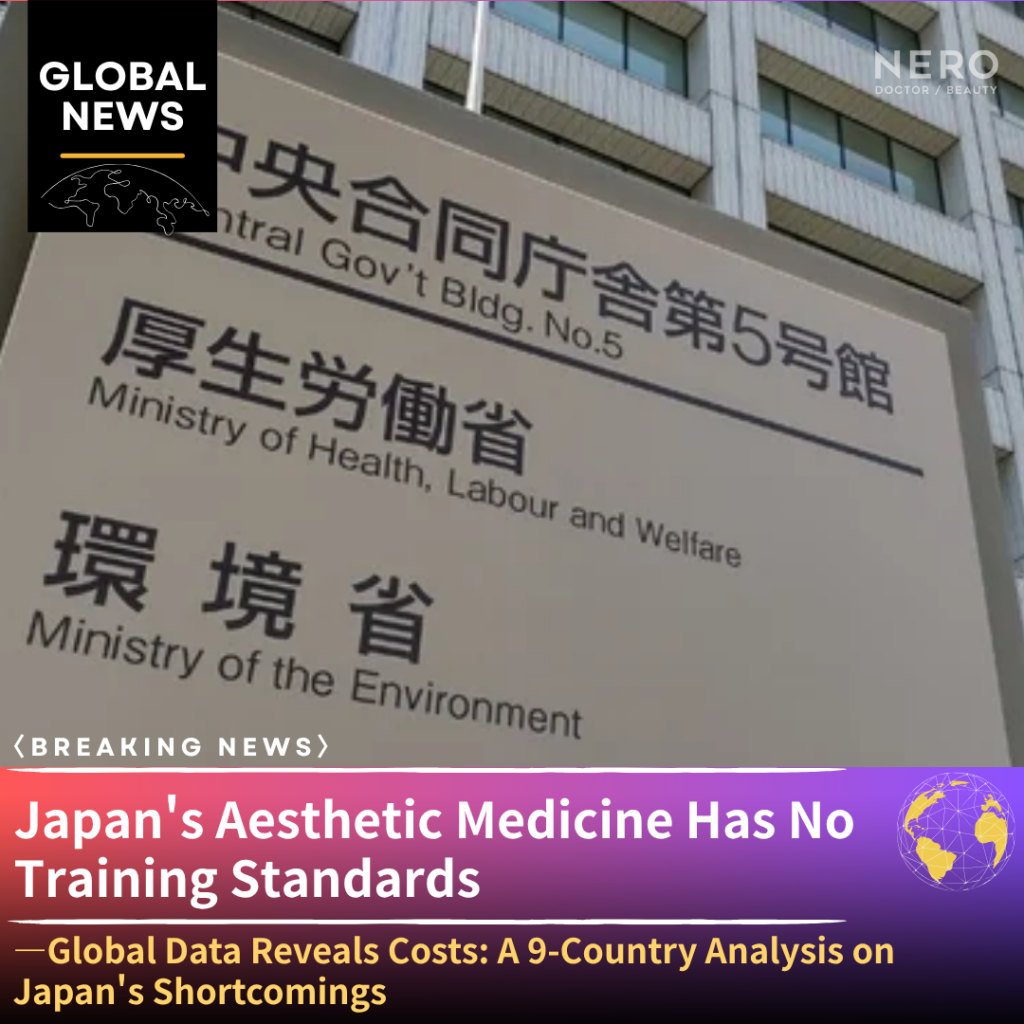
- NERO has reported on the Chokubi problem, illegal counselor diagnosis, and regenerative medicine loopholes separately. This article connects them through one fundamental question: Japan has no unified specialist training system for aesthetic medicine
- Nine countries—UK, Taiwan, France, Singapore, and others—are simultaneously accelerating regulatory frameworks. Their shared message: “Education must precede commercialization”
- We asked Dr. Hikari Kobayashi, board-certified dermatologist at Kobayashi Skin Care Clinic, for her clinical perspective on Japan’s structural gaps
In 2024, NERO investigated the Chokubi phenomenon.
In 2025, we reported on the Ministry of Health directive declaring counselor-led diagnosis illegal.
In 2026, we covered the Regenerative Medicine Act amendments and Korea’s ghost doctor crisis.
These appear to be separate issues.
But through sustained reporting, NERO kept arriving at the same question:
“Does Japan have unified specialist training standards for aesthetic medicine?”
The answer is no.


INDEX
From Chokubi to Counselor Diagnosis—One Structural Root
When we line up the issues NERO has covered, a common structure emerges.
📋 NERO’s Coverage of Japan’s Aesthetic Medicine Issues—A Shared Structure
Physicians can enter aesthetic clinics the day after completing initial residency—with no structured training in dermatology, anatomy, or complication management →NERO Feature
Non-physician counselors were de facto determining treatment plans—Ministry of Health codified this as illegal in 2025. The assumption that “physicians possess sufficient knowledge to make treatment decisions” was itself unstable →NERO Article
Exosomes and stem cell culture supernatants circulated in aesthetic clinics without notification—no mechanism ensured physicians could assess “what this product is and what risks it carries” →NERO Article
Products outside PMDA approval pathways continue to be used in aesthetic clinics—no system ensures physicians can properly evaluate and explain “the risks of using unapproved products” →NERO Article
Common Root: The absence of a unified training and credentialing system defining “what education qualifies a physician to perform which procedures”
The World Is Answering the Same Question—Each in Its Own Way
This isn’t a Japan-only problem.
Countries experiencing rapid aesthetic medicine expansion face the same structural challenge—and are responding with regulatory frameworks.
Facing this reality, the UK decided it could not remain passive.
Ofqual set educational standards, and JCCP established industry accreditation.
Scotland published draft licensing legislation in January 2026.
A UK expert stated:
Governance must support growth.
Competence must be demonstrable.”
Founder, Interface Aesthetics (UK), Surgeon, February 2026
This isn’t unique to the UK.
NERO’s investigation reveals regulatory developments across nine countries.
The Gap Between “Learning a Technique” and “Delivering Safe Care”
In June 2024, the Ministry of Health, Labour and Welfare’s Medical Policy Bureau convened the “Advisory Committee on Appropriate Implementation of Aesthetic Medicine.” The first meeting’s materials officially designated the following as policy-level issues:
・Examination and procedures by unlicensed personnel
・Insufficient informed consent (inadequate patient explanation and consent)
・Anxiety-inducing or coercive solicitation and contracting
・Low-quality care and care involving complications
・Failure to maintain medical records
These are precisely the problems generated by the structural void of “no unified specialist training system.”
That the issues NERO has individually investigated were confirmed as a comprehensive list in a government committee demonstrates the severity of the problem.
Source: Ministry of Health, Labour and Welfare “Advisory Committee on Appropriate Implementation of Aesthetic Medicine, 1st Meeting, Document 3” June 27, 2024 (Medical Policy Bureau)
In analyzing this problem, NERO has repeatedly felt a dissonance.
“Having learned a technique” and “being able to safely deliver that technique to patients” are not synonymous.
What Technical Training Teaches
Injection technique, laser settings, device operation procedures.
Can be acquired relatively quickly through industry-led workshops and seminars
What Requires Structured Education
“Is this procedure appropriate for this patient right now (indication assessment)?” “What are the contraindications (understanding contraindications)?” “What should be done if complications occur (emergency response)?” “Is the patient in a position to decline (informed consent)?”—These rest on foundations of dermatology, anatomy, and accumulated clinical experience
NERO has confirmed through multiple investigations that Japan lacks mechanisms to bridge this gap.
The Ministry of Health’s 2025 codification that “counselor-led diagnosis is illegal under the Medical Practitioners Act” arose because the assumption that “physicians can independently assess and explain” had collapsed in practice.
SUPERVISOR COMMENT
Dr. Hikari KobayashiKobayashi Skin Care Clinic / Board-Certified Dermatologist (Japan Dermatological Association)
Behind Japan’s ongoing Chokubi problem and unapproved product issues lies a structural void: no answer to the question “what education should qualify a physician to practice aesthetic medicine.”
As a board-certified dermatologist in daily practice, I keenly feel that learning procedural technique and being able to judge whether that procedure is truly appropriate for the patient in front of you are entirely separate skills.
The latter cannot be acquired without foundational dermatology, deep anatomical understanding, and extensive clinical experience.
Taiwan and France are accelerating regulatory development because a shared recognition has emerged: leaving this gap unaddressed means patients will continue to suffer harm.
In Japan too, I believe we’ve reached a stage where academic societies and related organizations must collaborate to establish standards for “the foundational knowledge and skills physicians performing aesthetic medicine should possess,” creating mechanisms that allow patients to objectively determine “this physician is trustworthy.”
Japan’s System Is Changing—But Slowly
It’s not that “nothing has changed.”
Through NERO’s sustained coverage, Japan’s regulatory system is demonstrably moving.
However, that movement prioritizes “addressing individual problems”—”fundamental training and credentialing reform” remains ahead.
📅 Japan’s Aesthetic Medicine Regulation—Recent Developments
Medical advertising guidelines and online advertising regulation initiated
“Advisory Committee on Appropriate Implementation of Aesthetic Medicine” established (June 27, 2024, 1st meeting).
Ministry of Health officially designated as issues: “examination and procedures by unlicensed personnel,” “insufficient informed consent,” “low-quality care and care involving complications,” “failure to maintain medical records”—problems NERO has reported were officially recognized as policy-level issues (Ministry of Health, Labour and Welfare, Medical Policy Bureau documents)
Counselor-led examination declared illegal; email/chat-based examination prohibited; hospital administrator safety management and reporting obligations strengthened (Medical Practitioners Act Article 17 applicability examples)
Outpatient physician oversupply area system implemented.
Amended Regenerative Medicine Act enforced (May 31).
Ministry of Health and related academic societies beginning substantive discussions on training system development
“Problem response” is advancing.
But “fundamental training standards reform (what Taiwan and France are pursuing)” has not yet been reached—this is NERO’s current assessment
What Patients Can Do Right Now
While regulatory frameworks develop, what can patients do to protect themselves?
- “Please explain the indications and contraindications for this procedure”—Physicians who can answer immediately possess foundational medical understanding.
If the response is only “You’ll be fine,” exercise caution - “How will you respond if complications occur?”—Confirms specific protocols and response systems
- “What is your specialty and training background?”—Whether the physician completed dermatology or plastic surgery residency is a useful safety indicator
- “What is the approval status of the products and devices you use?”—Choose physicians who can explain whether products have PMDA approval and, if unapproved, what risks exist

In the UK, practitioners increased 437% in two years; Taiwan and France rushed to build regulatory frameworks.
Japan remains in the “addressing individual problems” phase.
Patients cannot choose to “wait for the system to mature.”
That’s why the habit of asking “what education has this physician received?” is the best self-defense available now.
NERO will continue pursuing this issue to deliver aesthetic medicine you can choose with understanding, not emotion.
Summary
- The Chokubi problem, illegal counselor diagnosis, and regenerative medicine gaps NERO has reported all stem from the same root: the absence of a unified specialist training system
- The UK, Taiwan, France, and Singapore are accelerating regulatory development.
Their shared principle: “Education must precede commercialization” - NERO’s investigation confirms Japan is the only developed nation without a unified specialist training system for aesthetic medicine
- Until systems mature, what patients can do now is develop the habit of confirming four points: indications, contraindications, complication response, and product approval status
Frequently Asked Questions
Some Chokubi physicians study diligently.
However, it is factual that without specialist training in dermatology or plastic surgery, risks increase regarding indication assessment and complication management.
It’s important to confirm in advance “what training have you received?” and “what is your complication response system?”
Taiwan’s “3-tier risk-based credentialing” is a rational design: “rather than imposing uniformly high barriers, establish graduated standards matching procedural risk.”
France faced the same driver as Japan—”physicians shifting from low-reimbursement insurance practice to aesthetics”—and responded with formal university education.
Both countries’ experiences are expected to inform Japan’s regulatory discussions.
Each society’s website also allows searching certified specialists.
Additionally, directly asking during consultation—”How many cases of this procedure have you performed?” “How do you respond if complications occur?” “What is the approval status of the products you use?”—is an effective verification method.
Sources
Zargaran A et al. “Mapping the UK Aesthetic Medicine Industry” Aesthetic Surgery Journal Open Forum, February 11, 2026 (DOI: 10.1093/asjof/ojag006) / Interface Aesthetics “Aesthetic Medicine in 2026” February 26, 2026 / Gaskell A, Brondstater K “The Need for Regulated Training and Certification” J Clin Aesthet Dermatol 2025;18(7-8 Suppl 1):30-40 / Ministry of Health, Labour and Welfare “Advisory Committee on Appropriate Implementation of Aesthetic Medicine, 1st Meeting, Document 3” June 27, 2024 (Medical Policy Bureau) / Ministry of Health, Labour and Welfare “Status of Discussions at the Advisory Committee on Appropriate Implementation of Aesthetic Medicine” October 30, 2024, 111th Social Security Council Medical Subcommittee, Document 1 / Ministry of Health, Labour and Welfare “Examples of Medical Practitioners Act Article 17 Applicability (Medical Policy Bureau Notification No. 21, August 15, 2025)” / Taiwan Ministry of Health and Welfare “Aesthetic Medicine Related Regulations” 2026 / French Ministry of Health “Diplôme inter-universitaire de médecine esthétique” 2025