📌 Key Takeaways
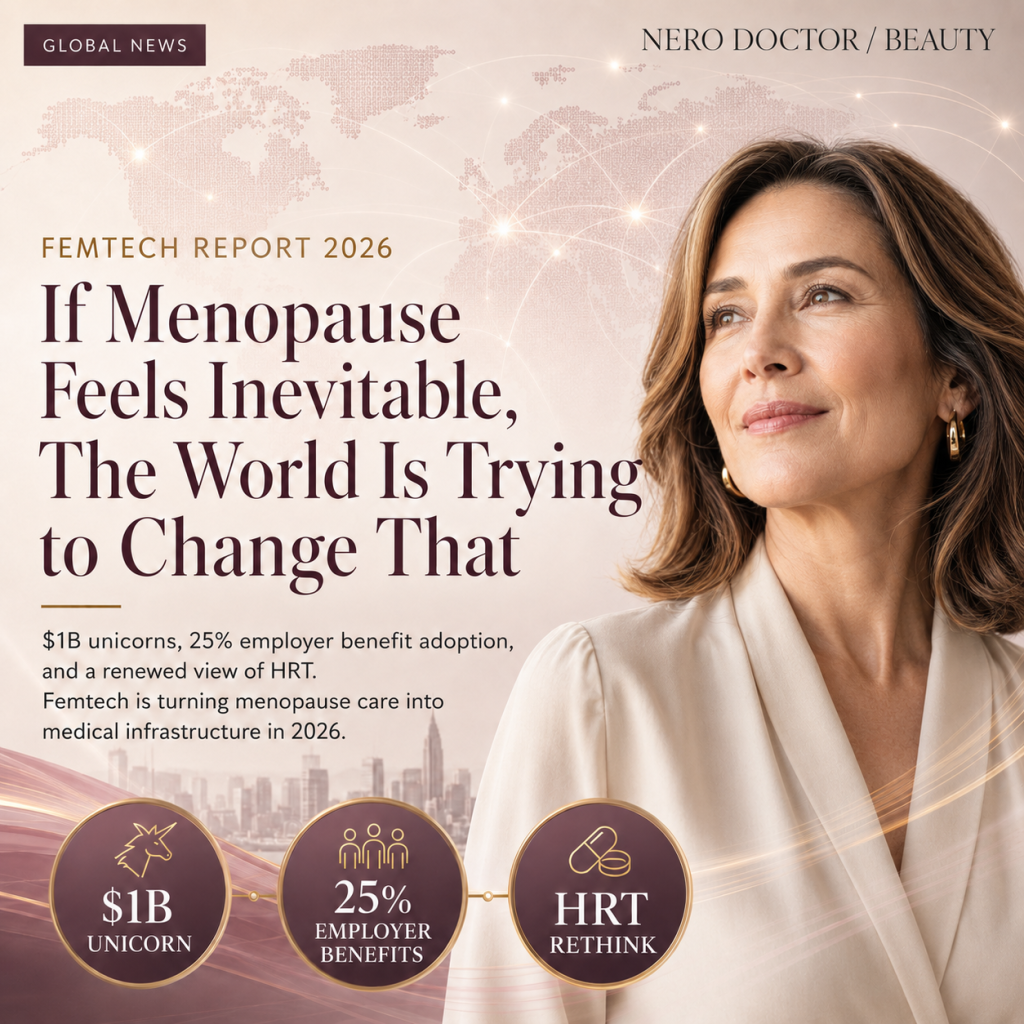
- In 2026, FemTech is pivoting from period-tracking apps
to full-scale menopause medical infrastructure—
led by telehealth startups like Midi Health
and expanding employer benefits in the West. - HRT (Hormone Replacement Therapy) is being reappraised
by leading societies including IMS and NAMS,
correcting the overcorrection triggered by the 2002 WHI study.
Note: FDA black-box warnings on estrogen products remain in effect. - Menopause directly accelerates skin aging—
collagen drops ~30% in the first five years post-menopause—
making hormonal health a critical variable
in aesthetic medicine outcomes. - Japan remains in an early transition phase,
but its aging demographics and longevity culture
position it as a potential leader
in integrated menopause + aesthetic care.
How many women have silently accepted hot flashes, night sweats,
sleep disruption, mood shifts, and skin dryness
as simply “part of getting older”?
That resignation—”there’s nothing to be done”—
is being dismantled, systematically, by the global medical community.
2026 may be recorded as the year FemTech shifted gears:
from menstrual cycle apps to menopause medical infrastructure.
This article examines the structural forces behind this global shift,
the gap between Western momentum and Japan’s “taboo culture,”
and the critical intersection with aesthetic medicine.


This is not a trend—it is the result of multiple forces
acting simultaneously.
Menopause is not only a gynecological concern.
It is a direct variable in aesthetic medicine outcomes—
affecting skin, hair, body composition, and mental well-being.
Aesthetic Changes Triggered by Menopause
Rapid collagen loss
(~30% decline within 5 years post-menopause)
Reduced skin moisture retention,
dryness, and itching
Skin laxity, loss of elasticity,
and increased fine lines
Facial contour changes
and fat redistribution
Hair thinning
and texture changes
Vaginal atrophy
and dryness
HRT and Skin — IMS / NAMS 2022 Guidelines
HRT supplements the estrogen and progesterone
that decline during menopause.
Its use for “anti-aging or cosmetic purposes” is not internationally recommended.
However, when initiated within 10 years of menopause or before age 60,
evidence suggests it may support bone health and cardiovascular maintenance—
making it a legitimate tool for managing healthspan,
not just symptom relief.
In aesthetic medicine, the key insight is this:
the effectiveness of collagen-stimulating treatments
(such as Sculptra and PRF)
may be maximized when the underlying hormonal environment is optimized.
Integrating hormonal health management
with aesthetic procedures is an emerging frontier—
one that forward-thinking clinics are beginning to address.
Where does Japan stand in the global FemTech landscape?
Japan does have structural advantages.
It holds one of the world’s highest aging rates,
the longest female life expectancy,
and a deeply embedded preventive health culture.
If “treating menopause as medicine” takes root,
Japan has the foundation to become a global leader
in integrated menopause + aesthetic care.
For anyone reading this article,
here are three questions worth sitting with.
Are you dismissing early menopause symptoms as “just stress”?
Hot flashes, waking at night, mood swings,
rapid skin dryness, and persistent fatigue
can be signs of perimenopause—
the transitional phase that can begin in the late 30s.
Menopause symptoms can start more than a decade
before the average menopause age of 51.
Early consultation with a gynecologist,
endocrinologist, or integrative medicine physician
is a legitimate first step.
Are your aesthetic treatments feeling less effective than before?
Collagen-stimulating treatments like Sculptra, PRF, and HIFU
may deliver stronger results
when the underlying hormonal environment is optimized.
Consider having both an aesthetic physician
and a gynecologist as part of your care team—
the two disciplines are more connected than most clinics acknowledge.
Have you ever actually asked a doctor about HRT?
The “HRT is dangerous” narrative from the 2002 WHI study
has been substantially revised by subsequent research.
IMS and NAMS now support HRT use under appropriate conditions—
such as initiating within 10 years of menopause or before age 60.
FDA black-box warnings on estrogen products remain in effect,
and no official reversal has been announced.
The right starting point is a direct conversation with your physician.

Having worked clinically with menopausal patients as a U.S. registered nurse,
the sheer number of women silently enduring symptoms
strikes me as the defining challenge—not just in Japan, but globally.
The reappraisal of HRT by medical societies,
the rapid growth of menopause startups in the West,
the integration of menopause benefits into employer packages—
all of it signals one thing:
menopause is a condition that can be addressed, not merely endured.
As a publication at the intersection of medicine and aesthetics,
NERO sees it as our responsibility
to make that connection visible.
“There’s nothing to be done” is no longer an acceptable answer.
When “menopause is medicine” becomes the norm—
not just in the West but in Japan—
a new category opens up:
integrated menopause and aesthetic care.
The world has opened that door.
The question is who walks through it first.
Summary
- The defining FemTech shift of 2026 is the move
from period-tracking apps to menopause medical infrastructure—
symbolized by the rapid growth of startups like Midi Health
and the expansion of menopause benefits at Western employers. - HRT is being reappraised by leading medical societies.
The overcorrection triggered by the 2002 WHI study is being corrected,
with IMS and NAMS updating guidelines to support appropriate use.
Pharma giants including Bayer are reinforcing their women’s hormone portfolios.
Note: FDA black-box warnings on estrogen products remain in effect. - Menopause directly accelerates aesthetic aging—
collagen drops ~30% in the first five post-menopausal years,
driving laxity, dryness, and volume loss.
Integrating hormonal health with aesthetic medicine
is an emerging differentiator for forward-thinking clinics. - Japan is still transitioning away from its “taboo culture,”
but its world-leading aging rate, female longevity,
and preventive health infrastructure
give it a credible path to becoming a global leader
in menopause × aesthetic × preventive medicine integration.
Frequently Asked Questions
but perimenopause—the transitional phase—
can begin 7 to 14 years earlier.
Symptoms appearing in the late 30s or early 40s are not unusual.
Delaying consultation with the assumption that “I’m too young”
can mean missing a window for early intervention.
If you experience persistent hot flashes, night waking,
mood swings, or rapid skin dryness,
a consultation with a gynecologist or endocrinologist is recommended.
Sources: IMS/NAMS Menopause Guidelines; Fuji Keizai Group FemCare Market Report 2024
that HRT significantly raises breast cancer risk.
Subsequent detailed analyses have shown
that the initial interpretation was overstated.
IMS and NAMS continue to present evidence
supporting HRT use under appropriate conditions—
such as initiating within 10 years of menopause or before age 60.
Risk profiles vary by individual circumstances,
hormone type, and duration of use.
HRT suitability must always be determined
through individual consultation with a physician.
Note: The FDA continues to maintain black-box warnings
on estrogen products. No official reversal has been announced.
Sources: IMS/NAMS Menopause Guidelines; NAMS 2022 Position Statement
in the five years following menopause,
rapidly accelerating skin laxity, wrinkles, and dryness.
Aesthetic treatments such as Sculptra, PRF, HIFU, and laser therapies
address these changes effectively—
but their outcomes may be enhanced
when the underlying hormonal environment is optimized.
Having both an aesthetic physician and a gynecologist
as part of your care team is worth considering.
Note: HRT for purely cosmetic purposes
is not internationally recommended;
it should be evaluated strictly
on symptom management and health grounds.
Sources: NAMS 2022 Position Statement; IMS Guidelines
Sources:
1. International Menopause Society (IMS) / North American Menopause Society (NAMS). Menopause Hormone Therapy Guidelines. Latest edition.
2. NAMS 2022 Position Statement on Hormone Therapy.
3. Women’s Health Initiative (WHI). “Initial and long-term findings on HRT.” JAMA. 2002 and subsequent follow-up studies.
4. Mordor Intelligence. “Femtech Market Size, Share & Analysis.” Latest edition. (For specific figures, refer directly to the latest published data.)
5. Fuji Keizai Group. “FemCare & OmCare Supplement Market Report.” 2024.
6. Midi Health official website and press releases. (For funding details, refer to official announcements.)
7. BusinessUpturn. “Women’s health is finally becoming a major tech trend.” 2025–2026 industry analysis.
⚠️ Editorial Note: This article reflects industry trends as of July 2026. Specific valuation figures for Midi Health, Bayer investment amounts, and precise employer benefit adoption rates have been intentionally expressed with appropriate qualification. For medical decisions, always consult a qualified physician and verify information against official primary sources.