📌 Key Takeaways
- The 44th JSAD Congress (Sendai, Aug 1–2, 2026) drew over 2,000 registered participants
and centered on a single question: What is aesthetic dermatology actually for? - Congress President Dr. Katsuko Kikuchi challenged the field to stop pressuring patients
toward beauty and to treat appearance improvement as a means, not an end. - 25 symposia covered wrinkles, pigmentation, rosacea, injectables, regenerative medicine,
AI, medical ethics, and oncology appearance care — revealing two simultaneous currents:
expansion and restraint. - The congress signaled a shift from “doing everything possible” to
“knowing what should and should not be done” — a marker of professional maturity.
“Stop coercing people into beauty.”
“Toward an aesthetic medicine that doesn’t hype.”
These were not the words of a critic from outside the industry.
They came from Dr. Katsuko Kikuchi — President of the 44th Annual Congress
of the Japanese Society of Aesthetic Dermatology (JSAD),
and director of Sendai Taihaku Dermatology Clinic —
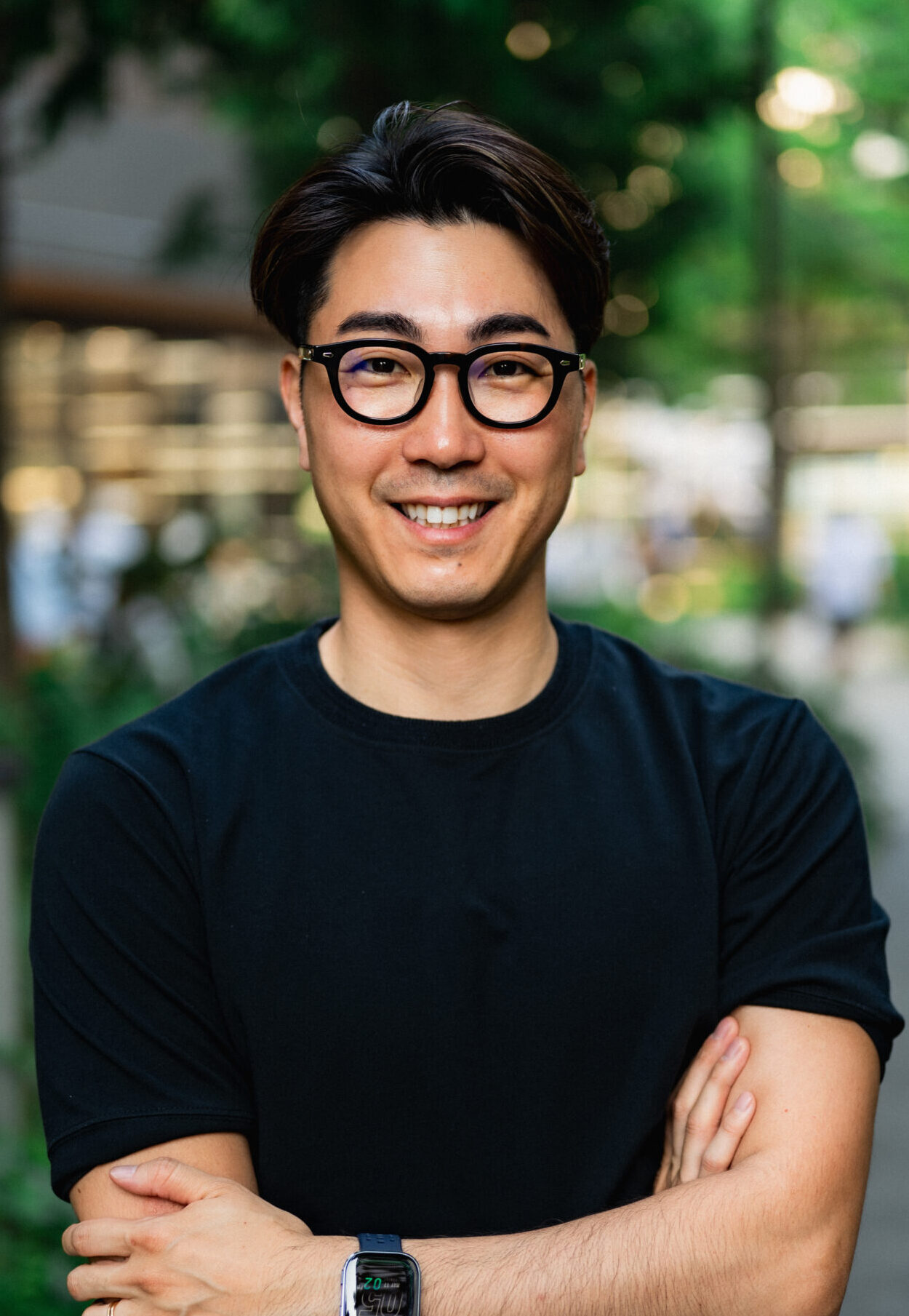
spoken directly to NERO’s editor-in-chief on the congress floor.
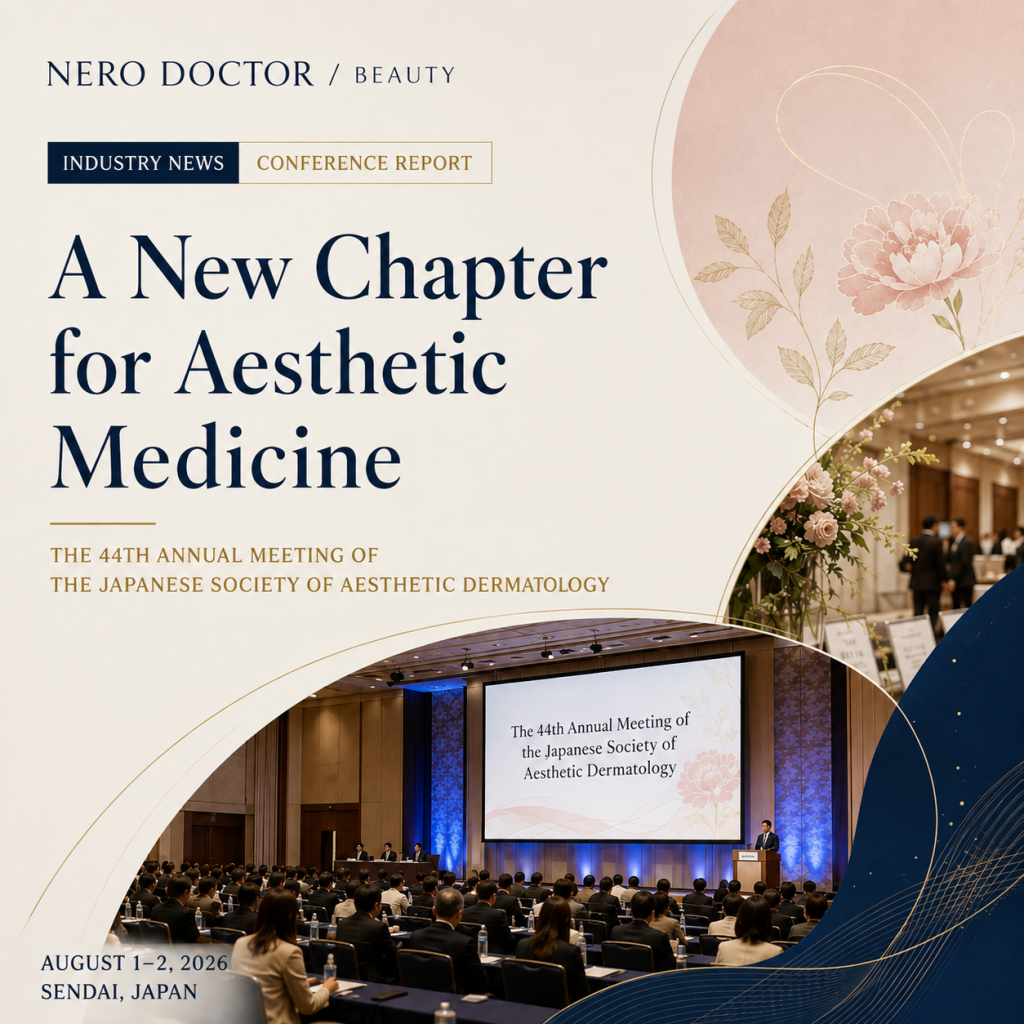
Over two days in Sendai, more than 2,000 clinicians gathered
to discuss the full spectrum of aesthetic dermatology:
wrinkles, pigmentation, rosacea, injectables, regenerative medicine,
AI integration, regulatory ethics, and oncology appearance care.
Beneath every session ran a single thread:
“Who is aesthetic dermatology for — and what is it truly meant to do?”
This report synthesizes the congress through Dr. Kikuchi’s words
and the 25 symposia that defined this year’s agenda.
What follows is NERO’s on-site reading of where the industry stands.


INDEX
Dr. Kikuchi’s Message: Beauty Is a Means, Not a Destination
The congress theme — “Everyone Beautiful, Everyone Happy” —
sounds simple on the surface.
But Dr. Kikuchi’s opening address gave it a sharper edge.
Behind these words lies a structural problem
that has been building across the global aesthetics industry:
as technology advances and markets commercialize,
the pressure to “become more beautiful” is increasingly directed at patients.
A cycle emerges — treatment after treatment,
satisfaction never quite arriving.
Dr. Kikuchi’s observation that some patients “don’t need to worry this much”
is a clinician’s honest assessment from the front line.
Her presidential lecture was titled:
“Aesthetic Dermatology as a Craft of Peace and Maturity —
Reflections on 15 Years Since the Great East Japan Earthquake.”
Framing aesthetic dermatology through the words “peace” and “maturity”
was, in NERO’s reading, a quiet declaration of transition:
from an industry that fulfills every request,
to a medical discipline that can judge what should be done.
Nine Themes That Defined the 2026 Congress Agenda
Across 25 symposia, the presidential lecture, special lectures,
and appearance care sessions, NERO identified nine organizing themes.
to non-surgical treatments and device fundamentals.
The phrase “Less is More” appeared in injectable sessions,
signaling a move from volume-first aesthetics
toward anatomy-guided precision.
and photoprotection guidance were prominent.
The direction: away from generic protocols,
toward understanding each patient’s specific pigmentation pathology.
set the tone.
Diagnosis, erythema management, rhinophyma, and laser-skincare combinations
were all addressed — reinforcing that visible appearance concerns
deserve rigorous clinical treatment.
Anatomy and Tissue Structure” reflect an industry reckoning
with the complications that have followed rapid technique proliferation.
The framing — past, present, future of injectables —
invited genuine critical reflection.
signaled a shift away from device prestige
toward strategic, evidence-based deployment decisions.
“Building Clinical Guidelines Based on Regulation, Society Recommendations,
and Patient Perspectives” indicate that regenerative medicine
has moved past hype into a phase of rule-setting.
Basic research on extracellular vesicles, skin stem cells,
and hair follicle regeneration was also well-represented.
Dermatology Specialists × AI” and
“Rethinking Dermatology Practice in the LLM Era”
show that AI is no longer a novelty topic —
the question is now how to embed it reliably into daily care.
informed consent obligations, and the tension between medical ethics
and commercial efficiency each received dedicated symposia.
The fact that these topics now stand independently
is itself evidence of a field demanding accountability from within.
chemotherapy-induced alopecia, nail disorders, and hyperpigmentation.
This session embodied Dr. Kikuchi’s conviction
that aesthetic dermatology is not only for the young and healthy —
it belongs to everyone navigating life.
Two Currents Running Simultaneously: Expansion and Restraint
Viewed as a whole, the 44th JSAD Congress carried two simultaneous currents.
This balance of expansion and restraint maps directly
onto Dr. Kikuchi’s call to stop hyping and stop coercing.
The congress was not anti-technology.
It asked: “For whose well-being, to what extent,
and by what judgment should these technologies be applied?”
What Aesthetic Dermatology Must Become: Judgment Over Capability
NERO’s synthesis of the congress’s direction, in five points:
but doing everything is not the right answer.
becomes more — not less — critical as options multiply.
is as clinically important as technical skill.
from “selling beauty” to “supporting quality of life.”
it is open to all ages, genders, and those undergoing disease treatment.
Dr. Kikuchi — who described the honor of presiding as “more than I deserve” —
chose Sendai, and chose the theme “Everyone Beautiful, Everyone Happy.”
It was a choice of universality over glamour.
The 44th JSAD Congress pointed toward an aesthetic medicine
defined by measured judgment — one that does not deny the pursuit of beauty,
but refuses to make it the only thing that matters.
That value system, NERO believes,
will determine which clinics and practitioners earn lasting trust.

I’m glad I approached Dr. Kikuchi directly.
The moment she said “toward an aesthetic medicine that doesn’t hype,”
the entire congress snapped into focus —
every session, every theme, connected by a single line.
The value of a congress is not measured by the number of techniques presented.
It is shaped by what the president chose to question,
and what they chose to say.
Sendai 2026 was that kind of congress.
NERO’s mission is not only to report on techniques.
It is to show how the clinicians on the front lines
are answering the question: where is aesthetic medicine going?
The weight of delivering that to readers who are genuinely searching for answers —
that responsibility is grounded in moments like this one.
We’ll be on the floor at the next congress too.
Summary
- The 44th JSAD Congress (Sendai, Aug 1–2, 2026; ~2,000 registrants)
was led by Congress President Dr. Katsuko Kikuchi,
who called for an aesthetic medicine that stops coercing patients toward beauty
and treats appearance improvement as a means to well-being — not an end in itself. - 25 symposia covered the full spectrum: wrinkles, pigmentation, rosacea,
injectables, regenerative medicine, AI, regulatory ethics, and oncology appearance care.
The congress asked not “what is trending” but “where is aesthetic dermatology going.” - Two simultaneous currents defined the meeting:
expansion (regenerative medicine, AI, new modalities)
and restraint (regulation, ethics, advertising standards, safety).
Their coexistence is the hallmark of a maturing field. - The congress’s clearest message: the field needs not “a medicine that can do everything”
but “a medicine that can judge what should be done” —
with expertise in indications, limitations, and patient expectation management.
is not “do more treatments” —
it is “what treatment do you actually need?”
At your next clinic visit, try asking:
“If I don’t do this treatment right now — what actually happens?”
A clinician who answers that question thoughtfully
is a clinician you can trust.
Frequently Asked Questions
dedicated to advancing and disseminating aesthetic dermatology science.
It brings together dermatologists, plastic surgeons, and aesthetic physicians
to address topics spanning basic science, clinical practice, ethics, and regulation.
The annual congress rotates across Japanese cities;
the 44th edition was held in Sendai in August 2026,
with approximately 2,000 registered participants.
sustainable results through minimal intervention rather than maximum volume.
At the 44th JSAD Congress, a session titled
“Less is More in Perioral Rejuvenation” presented approaches
that combine minimal filler with radiofrequency (RF) energy —
prioritizing anatomical precision over volume accumulation.
It represents a broader industry shift away from “more filler = better results.”
that address visible changes caused by cancer treatment —
including chemotherapy-induced hair loss, nail disorders,
hyperpigmentation, and skin dryness.
A dedicated special symposium at the 44th JSAD Congress,
featuring leading specialists in oncology dermatology,
embodied Congress President Dr. Kikuchi’s conviction
that aesthetic dermatology is not exclusively for healthy young patients —
it belongs to anyone navigating significant life challenges.
Sources:
1. 44th JSAD Annual Congress Official Website. shun-convention.jp/bihifu44/
2. Congress President’s Address, Dr. Katsuko Kikuchi. shun-convention.jp/bihifu44/greeting.html
3. On-Demand Session List (as of August 4, 2026). shun-convention.jp/bihifu44/docs/On-demand_session.pdf
4. On-site interview with Dr. Katsuko Kikuchi by NERO Editor-in-Chief Kenichi Adachi, August 2, 2026, Sendai (audio recording).