📌 Key Takeaways
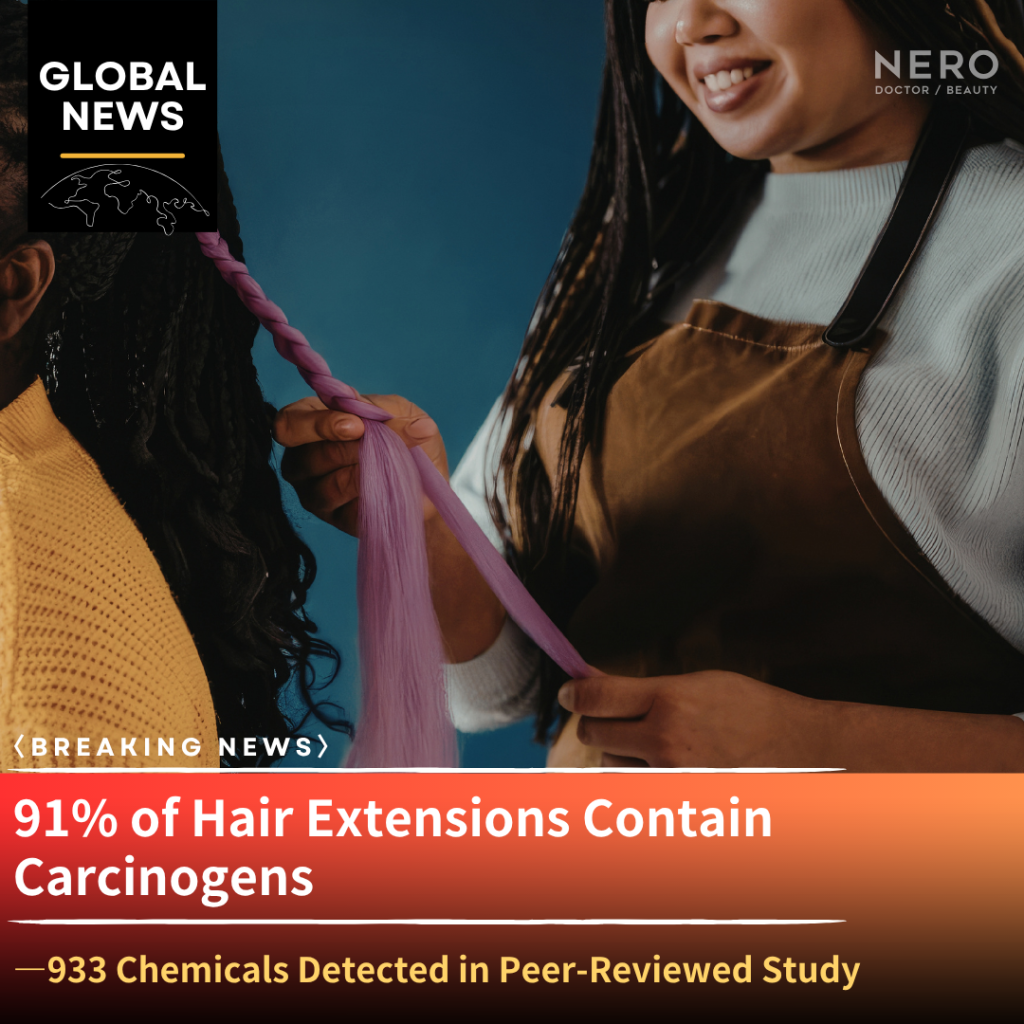
- Silent Spring Institute analyzed 43 hair extension products: 91% contained chemicals linked to cancer risk, according to peer-reviewed research published February 11, 2026
- Total of 933 chemical signatures detected—only 169 were identifiable, leaving 764 as “unknown but potentially harmful substances”
- Dermatology experts note scalp absorption of these chemicals may influence inflammatory responses in filler and injectable aesthetic procedures
- Breast cancer-associated chemicals detected in 36 products; some organotin compounds exceeded EU safety limits
“What you wear for beauty might become a risk to your body.”
In February 2026, research emerged that confronted this possibility head-on.
The study came from Silent Spring Institute in Massachusetts—a nonprofit research organization specializing in environmental chemicals and human health.


INDEX
Study Overview: What Was Tested and How
Instead of searching for specific chemicals, this cutting-edge method detects and catalogs everything present in a sample. It can identify unknown hazardous substances that traditional testing would miss. The detection of 933 chemicals in this study was possible only through this approach.
Researchers analyzed 43 products purchased from online retailers and beauty supply stores, covering synthetic fiber, human hair, and plant-based (including banana fiber) extensions.
Why Hair Extensions Pose Health Risks
“Extensions only touch hair, not skin—how is that dangerous?” This is a reasonable question. The issue lies in the method of contact.
① Scalp Absorption: When extensions contact the scalp, chemicals can penetrate skin and enter the bloodstream. The scalp has higher absorption rates than facial skin.
② Airborne Volatilization: Heating synthetic extensions with flat irons or blow dryers releases chemicals into the air. Previous studies have confirmed toxic gas emissions during heat styling.
③ Hand Transfer: Touching extensions and then touching your face, eyes, or mouth transfers chemicals directly to mucous membranes.
Dr. Sandra Tsao, dermatologist at Massachusetts General Hospital, states: “Both synthetic and human hair extensions can allow chemical absorption through the scalp, skin, and air.”
Connection to Aesthetic Medicine: What to Disclose Before Treatment
This parallels the gel nail and acrylate allergy issue NERO previously covered: daily beauty habits can influence injectable aesthetic procedures.
• Do you regularly use hair extensions?
• Have you experienced redness, itching, or irritation on your scalp, face, or neck after wearing extensions?
• Have you ever reviewed ingredient information for the products you use?
If endocrine disruptors (hormone-disrupting chemicals) or inflammatory agents have accumulated in your system, post-injection inflammatory responses may be more pronounced than typical. Informing your physician about extension use enables safer treatment management.
Regulatory Landscape: Why This Hasn’t Been Addressed
The answer is straightforward: hair extensions are essentially unregulated at the federal level in the United States.
In the U.S., the FDA strictly regulates food, drugs, and medical devices—but cosmetics and hair care products (including extensions) face minimal safety oversight. No pre-market ingredient approval or mandatory safety testing exists.
Japan’s Pharmaceutical and Medical Device Act regulates cosmetic ingredients, but hair extensions as “decorative accessories” occupy a gray zone outside standard cosmetic classification.
The core revelation of this research is that we use beauty products without knowing what’s in them. Of 933 detected chemicals, only 169 were identified—the remaining 764 are “something detected, but we don’t know what.”
Gel nails, hair extensions, hair dyes—beauty products we use routinely may contain chemicals whose safety has never been adequately verified.
When receiving aesthetic treatments, telling your physician about your product habits is the first step in self-protection.
Summary
- Analysis of 43 hair extension products revealed 91% contained carcinogens and 933 total chemicals (Silent Spring Institute peer-reviewed study, February 11, 2026)
- Breast cancer-associated chemicals detected in 36 products; some exceeded EU safety limits
- Absorption via scalp, air, and hands creates systemic exposure—disclosing extension use to physicians before aesthetic procedures is critical
- Global beauty product regulation remains weak—developing habits of ingredient verification protects your health
Frequently Asked Questions
Sources: Franklin ET, Favela K, Spies R, Ranger JM, Rudel RA. “Identifying Chemicals of Health Concern in Hair Extensions Using Suspect Screening and Nontargeted Analysis.” Environment & Health (ACS), February 11, 2026 / Silent Spring Institute. “Hair extensions contain many more dangerous chemicals than previously thought.” February 11, 2026 / The Boston Globe. “Hair extensions found to contain dozens of hazardous chemicals, Newton study shows.” February 11, 2026