📌 Key Takeaways
- The 4th Japan Cosmetic Medicine Association (JCMA) convenes October 3–4, 2026
at Hikarie Hall, Shibuya, Tokyo — chaired by Dr. Akiko Tanaka (Akiko Clinic). - A landmark session frames fat-dissolving injectables as moving
from cosmetic-grade to pharmaceutical-grade classification —
a direct challenge to a longstanding regulatory gray zone in Japan. - PCL × PDRN dual protocols and collagen biostimulator + thread lift combinations
signal that “protocol design” is replacing single-agent thinking
as the new clinical standard. - NERO reads the program not as a conference guide,
but as a barometer of where Japan’s aesthetic medicine market is heading next.
“Fat-dissolving injectables: from cosmetic to pharmaceutical era.”
“PCL biostimulator and PDRN dual strategy.”
“Collagen agents and thread lift combination.”
Line up the session titles from this year’s 4th Japan Cosmetic Medicine Association (JCMA),
and a single overarching narrative emerges: the generational turnover of aesthetic medicine agents —
from isolated products to integrated treatment architecture.
Held October 3–4, 2026 at Hikarie Hall (9F, Shibuya Hikarie, Tokyo),
the 4th JCMA is chaired by Dr. Akiko Tanaka, Director of Akiko Clinic
and former President of the 110th JSAS (2022).
The conference theme: “Aesthetic Medicine That Connects to the Future.”
This is not simply a venue for technical presentations.
It is a mirror reflecting what the aesthetic medicine market
is positioning as its next structural pillar.
NERO covers this conference not as a participation guide,
but as a tool for reading the industry’s current momentum —
what practitioners are betting on, and why it matters to patients.
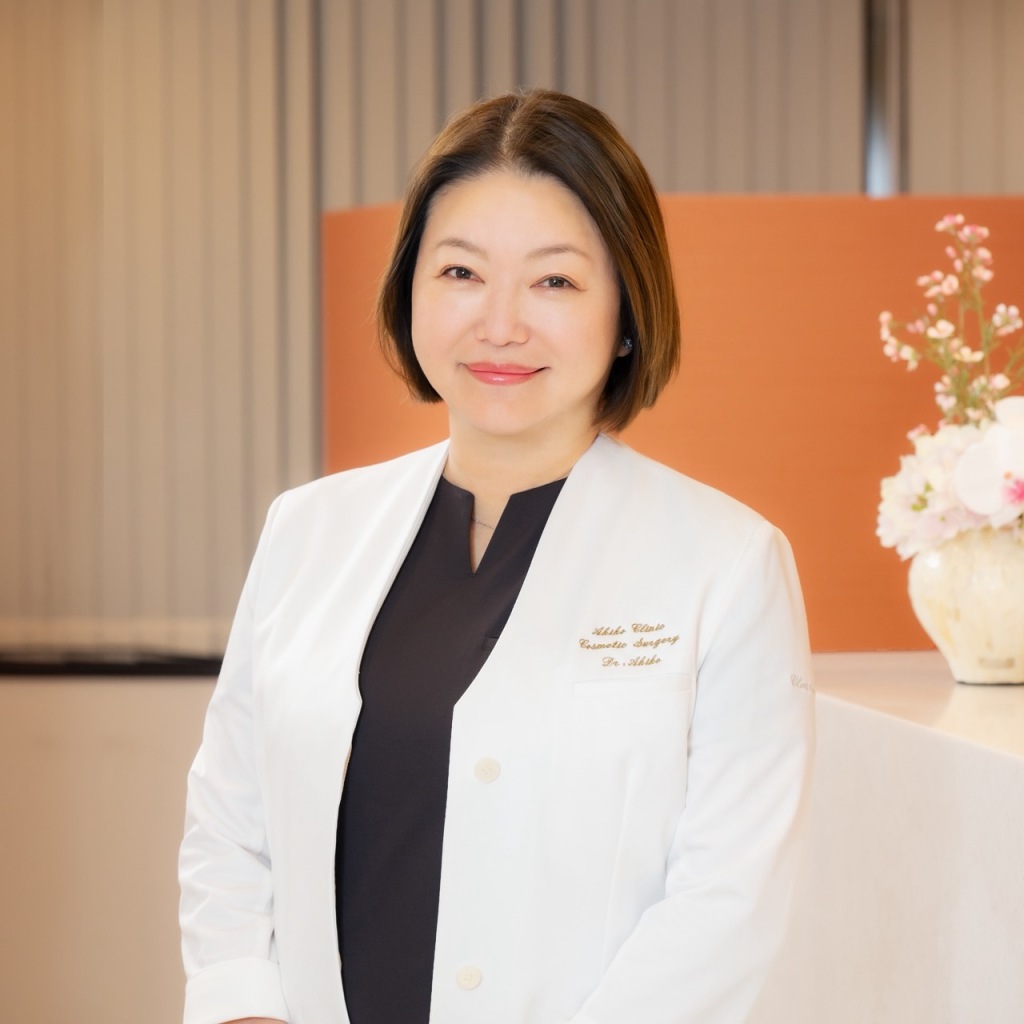
Conference theme: “Aesthetic Medicine That Connects to the Future.”
what do you — right now — most want to learn?”


Conference Overview
Three Sessions That Reveal Where the Industry Is Heading
With 18 symposia, 4 luncheon seminars, and 4 sponsored seminars on the program,
not every session carries equal strategic weight.
NERO identifies three sessions where the industry’s shifting agent strategy becomes most legible.
The title of Luncheon Seminar 3 (co-hosted by MDT International) is telling:
“New Selection Criteria for Fat-Dissolving Injectables — From Cosmetic-Grade Agents to the Era of Injectable Pharmaceuticals”
This is not merely a thematic choice.
For years, agents used for fat-dissolving injections in Japan have circulated
under a cosmetic-grade classification — meaning they were not subject
to the pharmaceutical approval process under Japan’s Pharmaceuticals and Medical Devices Act (PMD Act).
A regulatory gray zone has persisted within the industry.
The phrase “era of injectable pharmaceuticals” reads, to NERO,
as an industry signal that this gray zone is being confronted directly.
From a patient perspective, the core question is transparency:
do you know what is actually being injected into your body?
Dr. Haruka Taniji (Kyoritsu Cosmetic Surgery & Dermatology)
DAY 2 · Oct 4 · 12:10–13:00 · Hall 1 · Co-hosted by MDT International
Sponsored Seminar 1 (co-hosted by Appeal International) focuses on:
“The Evolving Potential of Skin-Regenerating Agents — Clinical Approaches and Strategy
Using Next-Generation Hydrophilic PCL and Compound Dual PDRN”
PCL (polycaprolactone) biostimulators have gained traction as a long-duration alternative to HA fillers,
offering both volumization and tissue stimulation.
Pairing PCL with PDRN (polydeoxyribonucleotide) —
an agent known for tissue repair, anti-inflammation, and angiogenesis promotion —
creates what practitioners are calling a “dual strategy.”
The shift is conceptual as much as clinical:
from “one injection that does everything”
to “a designed protocol that combines agents for synergistic effect.”
Agent selection is now less about product knowledge and more about protocol architecture.
Speakers: Dr. Miyuki Kobayashi (Seishin Beauty Clinic Atami),
Dr. Noriyuki Ishizuka (ARIEL.BUST.CLINIC), Dr. Masako Furuichi (Oracle Beauty Dermatology Shinjuku)
DAY 1 · Oct 3 · 19:00–20:00 · Hall 1 · Co-hosted by Appeal International
Sponsored Seminar 2 (co-hosted by NORIZ) addresses:
“Combination Treatment Using Collagen Agents and Thread Lifts
in Next-Generation Skin Regeneration Therapy”
Combining collagen-stimulating biostimulators (PLLA, PCL, collagen-induction agents)
with thread lifts represents a departure from simple volume replacement.
The logic is dual-axis:
internal remodeling (biostimulator-driven collagen induction)
paired with external repositioning (mechanical lift via threads).
This aligns with the “structural approach” highlighted at ISAPS 2024 —
treating facial aging not as a surface problem,
but as a three-dimensional architectural challenge.
It demands that practitioners understand anatomy before selecting agents.
Speakers: Dr. Daiki Sato (FACE SKIN CLINIC Shinjuku),
Dr. Hiroto Yanagawa (blinc clinic), Dr. Akiyoshi Yamamoto (Pione Beauty Clinic)
DAY 1 · Oct 3 · 11:00–12:00 · Hall 2 · Co-hosted by NORIZ
Featured Speakers: Sponsored Seminar 2 (NORIZ)
specializing in plastic surgery.
Received his MD (Doctor of Medicine) from the University of Tokyo in 1988
and subsequently founded Kanda Cosmetic Surgery & Plastic Surgery.
A plastic surgery-trained aesthetic physician with decades of clinical experience.
Trained at Tokyo Metropolitan Okubo Hospital and Kyoritsu Cosmetic Surgery Shinjuku
before joining his current clinic in 2025.
Certified by the Japan Anti-Aging Medicine Society;
a recognized KOL for thread lifts and multi-agent protocols.
Trained across anesthesiology, emergency medicine, plastic surgery, and dermatology
before joining Shonan Beauty Clinic.
Founded blinc clinic in 2023 after directing two branch locations.
Trained at Tachikawa Hospital and Keio University Hospital,
followed by Tokyo Metropolitan Hiroo Hospital (anesthesiology)
and Shonan Beauty Clinic.
Has directed Pione Beauty Clinic since 2023.
The Broader Signal: Cross-Specialty Collaboration as Industry Infrastructure
In her President’s Message on the official JCMA 2026 website,
Dr. Tanaka reflects on a formative tension in her career:
I was restricted to attending conferences only when presenting my own work
or when my director served as conference president.
Interaction with physicians from other clinics was also strictly limited.
After opening my own clinic, I was free to attend any conference I chose
and participate in a wide range of study groups.
Comparing those 14 years at a large chain with the 16 years since,
the latter has been overwhelmingly more formative for my own growth.“
than 14 years inside a closed system.”
This is not merely personal reflection.
It speaks to a structural dynamic in Japan’s aesthetic medicine industry:
large chain clinics have historically operated as closed information ecosystems,
limiting physician exposure to outside knowledge and peer exchange.
The JCMA exists, in part, as a direct response to that dynamic —
a cross-clinic, cross-specialty forum designed to raise the floor of clinical quality industry-wide.
① Regulatory clarification is underway.
The fat-dissolving injectable debate — cosmetic vs. pharmaceutical classification —
is a transparency issue at its core.
Patients deserve to know what is being injected and under what regulatory framework.
② Single agents are giving way to combination protocols.
PCL × PDRN and collagen biostimulator + thread lift combinations
signal that competitive advantage now lies in protocol design,
not product selection alone.
③ Specialty boundaries are dissolving.
Aesthetic surgery, aesthetic dermatology, aesthetic internal medicine,
gynecological aesthetics, and hair loss medicine now share a single stage.
The boundary lines within aesthetic medicine will continue to blur.

“Fat-dissolving injectables may have been classified as cosmetics all along” —
for patients, this is a serious revelation.
The real question is: do you know what is actually being injected into you?
The title of Luncheon Seminar 3 reads to me as a signal
that the industry is finally confronting this question head-on.
Dr. Tanaka’s account of being restricted from attending conferences
and interacting with peers during her years at a large chain clinic
is something anyone inside this industry will feel the weight of.
If part of the quality gap in aesthetic medicine stems from closed information systems,
then forums like the JCMA — designed to break down those walls —
are not just educational events.
They are infrastructure for raising the entire industry’s standard.
NERO will continue to follow this movement.
Registration
Credit card payment only (convenience store payment and document submission deadlines have passed).
Official Site: jcma2026.umin.jp
- The 4th JCMA (Oct 3–4, 2026, Shibuya) is chaired by Dr. Akiko Tanaka
and themed around the future of aesthetic medicine. - Three sessions stand out: fat-dissolving injectable reclassification,
PCL × PDRN dual protocols, and collagen biostimulator + thread lift combination design. - The regulatory shift from cosmetic to pharmaceutical classification
for fat-dissolving injectables is a patient transparency issue, not just a clinical one. - The conference itself reflects a broader industry push
toward cross-specialty, cross-clinic knowledge exchange —
a structural antidote to the closed-information culture of large chain clinics.
including aesthetic surgeons, dermatologists, aesthetic internists, and related specialists.
The 4th edition is held October 3–4, 2026 at Hikarie Hall, Shibuya, Tokyo.
Registration is open via the official site at jcma2026.umin.jp.
under cosmetic-grade classification, bypassing the pharmaceutical approval process
under the PMD Act (Japan’s equivalent of drug regulatory law).
Reclassification as injectable pharmaceuticals would require formal approval,
improving patient safety and treatment transparency.
PDRN (polydeoxyribonucleotide) promotes tissue repair, reduces inflammation,
and supports angiogenesis.
Combining the two targets different biological pathways simultaneously,
potentially producing synergistic outcomes that neither agent achieves alone.
This dual-protocol approach is gaining traction in Japanese clinical practice as of 2026.
Sources:
1. 4th Japan Cosmetic Medicine Association Official Website. jcma2026.umin.jp (directly verified)
2. Conference Timetable PDF. jcma2026.umin.jp/program_timetable.pdf
3. Speaker profiles based on information provided by the conference secretariat.