📌 Key Takeaways
- Korean aesthetic clinic chains are accelerating their Japan expansion in 2025-2026. VANDS CLINIC opened locations in Shinjuku, Yokohama, Shibuya, and Nagoya in rapid succession. OGANACELL Ginza launched in May 2026
- In response, Japan’s largest chain SBC Medical Group reduced prices on 100+ treatments in March 2025 (official announcement)—signaling direct competition against Korean-style low-cost maintenance models
- Japan’s aesthetic medicine market is now rapidly polarizing into “mass-market monthly maintenance (¥10,000-20,000/month)” versus “specialist-led customized care”
“You no longer need to fly to Korea for Korean skin management.”
This statement is becoming reality.
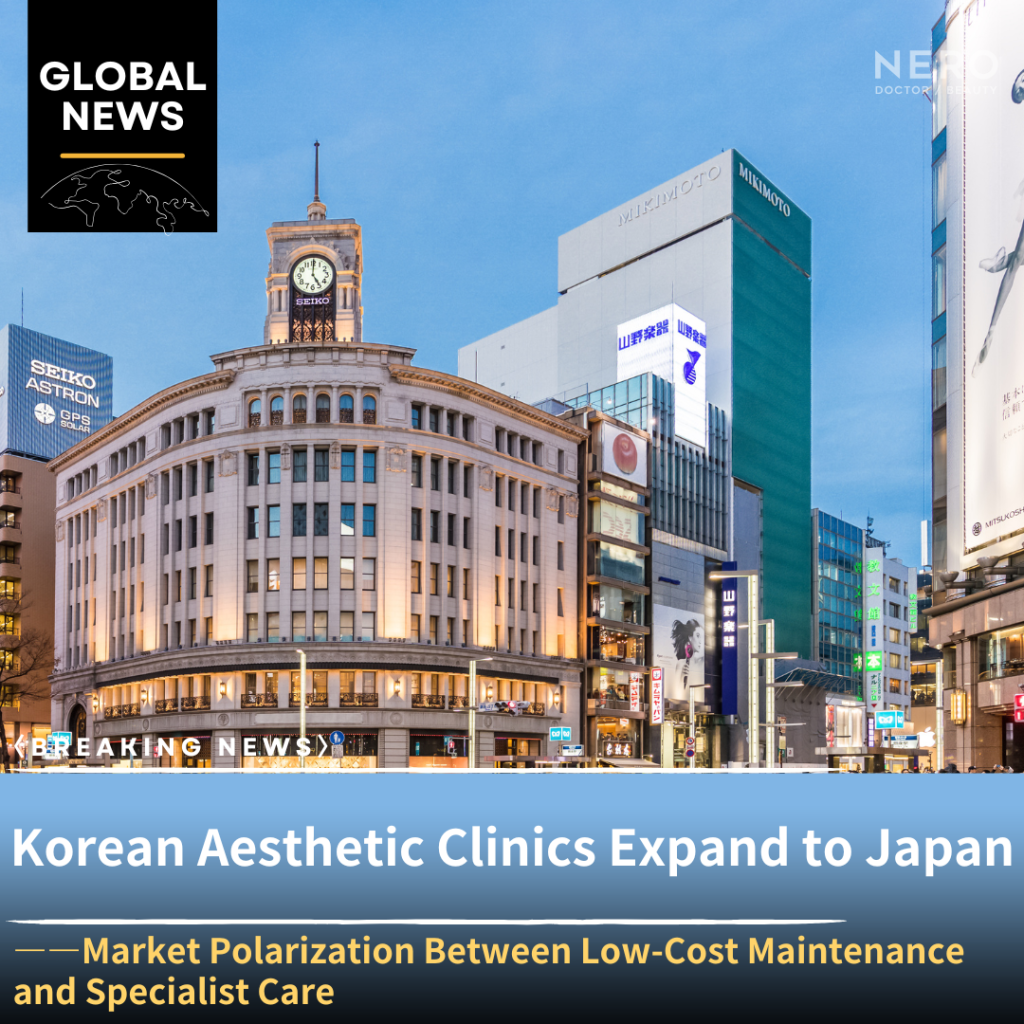
Between 2024 and 2026, Korean aesthetic clinic chains have been entering the Japanese market in waves. This movement goes beyond simple “foreign market entry”—it is fundamentally reshaping Japan’s aesthetic medicine pricing structure, usage patterns, and cultural norms.


INDEX
- What’s Happening: The Korean Clinic “Japan Landing Rush”
- Why Are Korean Clinics Coming to Japan?
- “Skin Management” as Cultural Import: How Japan Uses Aesthetic Medicine Is Changing
- Japan’s Largest Chain Responds: SBC’s 100-Treatment Price Cut
- Japan’s Aesthetic Medicine Market Polarizes: How Should Consumers Navigate?
- Summary
- Frequently Asked Questions
What’s Happening: The Korean Clinic “Japan Landing Rush”
The most visible example is VANDS CLINIC.
Expanding to five locations across four cities in just two years represents an exceptionally aggressive pace even by Japanese aesthetic clinic industry standards.
On May 25, 2026, OGANACELL Dermatology & Plastic Surgery, based in Seoul, also opened its first Japan location in Ginza. Unlike the “low-cost maintenance” model, OGANACELL positions itself as a “premium” clinic offering high-value individualized care by board-certified dermatologists.
Why Are Korean Clinics Coming to Japan?
Korea’s domestic market has seen explosive growth of “factory-style” high-volume, low-price clinics, triggering intense price competition. Some treatments have dropped to just a few thousand yen per session.
Meanwhile, Japan’s market maintains higher treatment prices, and Japanese consumers hold strong brand affinity and trust toward Korean aesthetic expertise. Many Korean clinics are choosing Japan expansion as an escape from domestic price wars, seeking higher margins in a market that values Korean brands.
Another key factor is the “stranded medical tourist” demographic.
Social media fueled explosive growth in Japanese women traveling to Korea specifically for affordable skin management treatments. However, yen depreciation and rising airfare costs have made casual Korea trips increasingly difficult. “If famous Korean clinics come to Japan, I can get the same treatments without travel costs”—this demand is driving the Japan expansion wave.
“Skin Management” as Cultural Import: How Japan Uses Aesthetic Medicine Is Changing
Korean clinics aren’t just importing treatments—they’re importing an entirely different usage culture for aesthetic medicine.
A Korean-originated approach to aesthetic medicine that shifts from “problem-solving” (removing spots, erasing wrinkles) to “preventive maintenance”—visiting 1-2 times monthly at ¥10,000-20,000 per session.
Typical treatments include laser toning (evening skin tone), Potenza (RF + microneedling for pores and texture), skin boosters (PDRN/PN regenerative injections), and LDM management (ultrasound-based skin care). The concept normalizes aesthetic treatments as routine as visiting a hair salon or dentist.
VANDS CLINIC’s core concept is “Casual Beauty”—positioning itself as “affordable yet high-quality,” with pricing designed for high-frequency repeat visits.
Japan’s Largest Chain Responds: SBC’s 100-Treatment Price Cut
The Korean clinic offensive has forced Japan’s established players to respond.
The most symbolic move came from SBC Medical Group’s massive price reduction.
SBC is also a NASDAQ-listed company (as covered in previous NERO reporting). When a group operating 250+ facilities announces “sustainable pricing,” it signals a clear strategic shift toward building a Korean-style low-cost maintenance market in Japan.
These developments have created clear market polarization in Japan’s aesthetic medicine landscape.
This polarization isn’t about “which is correct.” The right choice depends on your usage goals, objectives, and budget.
Mass-Market Maintenance Model suits: Those seeking skin tone improvement, pore care, and regular condition maintenance. Budget-conscious consumers wanting frequent visits. First-time aesthetic medicine users.
Premium Specialist Model suits: Those wanting fundamental improvement of specific skin concerns. Consumers prioritizing risk management. Those seeking to avoid complications or pursuing serious anti-aging protocols.
• Who performs the treatment—physician, nurse, or other staff?
• Whether products and devices used are approved in Japan
• What consultation and compensation systems exist for complications
• Don’t choose based solely on price—research practitioner qualifications, experience, and case volume
I view Korean clinic entry into Japan not as a “threat” but as an “evolution opportunity” for Japan’s aesthetic medicine industry.
The emergence of “¥10,000/month regular visits” as an option has brought in demographics previously disconnected from aesthetic medicine. That itself represents healthy market expansion.
However, my concern amid polarization is “the hollowing out of the middle.” Clinics must either chase low prices (risking quality degradation) or maintain high prices through differentiation—those stuck “vaguely mid-priced” will struggle most.
To readers: “Experimenting frequently because it’s cheap” and “receiving continuous care from a trusted physician” should ideally coexist. Develop the perspective to strategically navigate this polarized market.
Summary
- VANDS CLINIC executed aggressive Japan expansion across Shinjuku, Yokohama, Shibuya, and Nagoya (2024-2026). OGANACELL Ginza opened May 25, 2026
- Drivers include intensifying price competition in Korea and demand from “stranded medical tourists”—Korean “skin management” culture of ¥10,000-20,000 monthly maintenance visits is landing in Japan
- SBC Medical Group reduced prices on 100+ treatments in March 2025. Major chains are responding to the low-cost wave
- Japan’s aesthetic medicine market is rapidly polarizing between “mass-market maintenance” vs. “specialist customization”—strategic navigation based on individual goals is essential
Frequently Asked Questions
Sources
VANDS MARKETING official press release “VANDS CLINIC Yokohama Opens January 27, 2025” PR TIMES January 13, 2025 / VANDS CLINIC official websites (Shinjuku, Yokohama, Shibuya, Nagoya: vandsclinic.co.kr) / SBC Medical Group Holdings official announcement “Comprehensive Price Revision for Aesthetic Dermatology Treatments Implemented March 17, 2025” March 17, 2025 / OGANACELL official website (oganaglobal.com)