📌 Key Takeaways
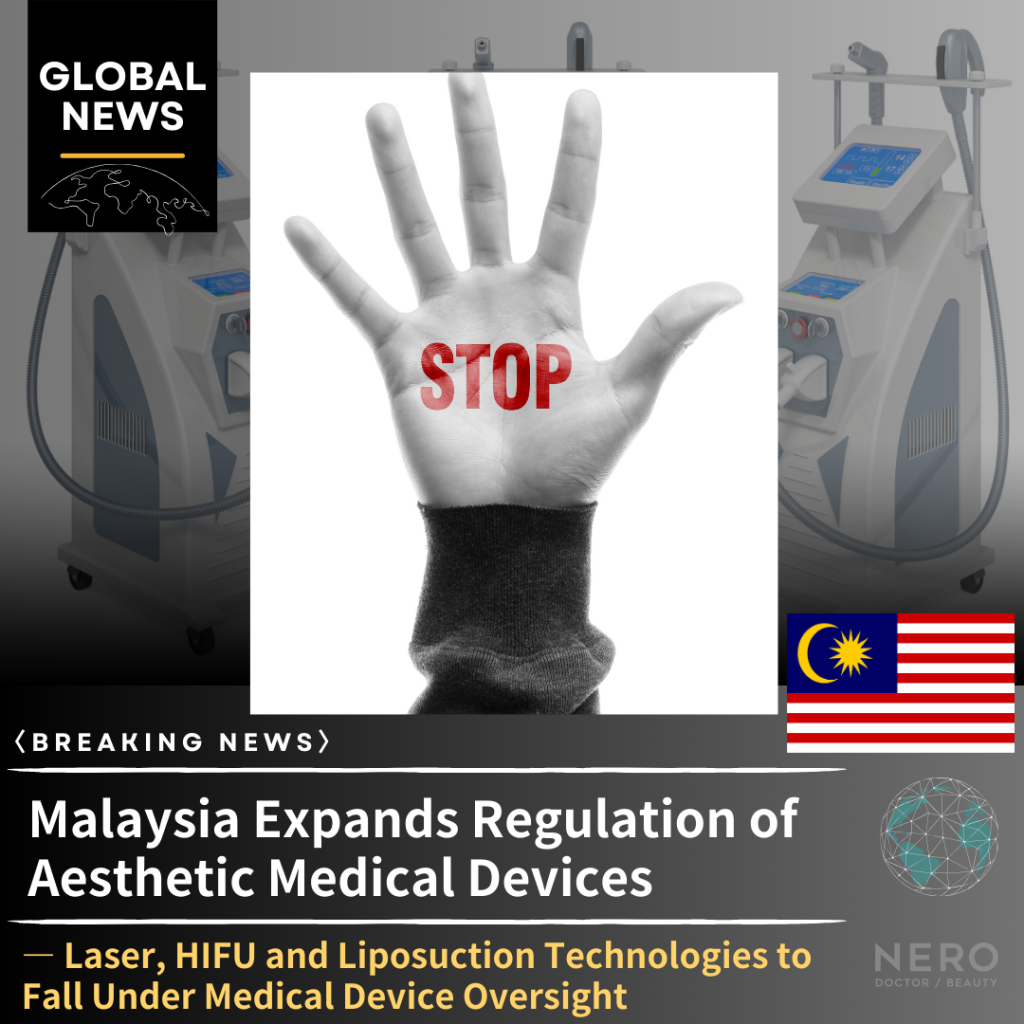
Malaysia will regulate aesthetic treatment devices under medical device law
Laser, HIFU and liposuction technologies are included
The regulation will take effect on June 1, 2026
Rapid market growth is driving stronger safety oversight
Malaysia’s Medical Device Authority (MDA) has introduced a new regulatory framework covering technologies used in aesthetic and cosmetic medical procedures.
Under the newly gazetted “Medical Device (Designated Medical Devices) Order 2026,” certain devices commonly used in aesthetic treatments will now fall under the country’s formal medical device regulatory system.
The regulation is scheduled to take effect on June 1, 2026, and will introduce requirements related to:
-
product registration
-
safety evaluation
-
practitioner qualification
The move reflects growing regulatory attention toward the rapidly expanding aesthetic medicine market in Asia


INDEX
What Is Changing in Malaysia’s Aesthetic Device Regulation
Malaysia’s Medical Device Authority announced the Medical Device (Designated Medical Devices) Order 2026, bringing selected aesthetic treatment technologies under the country’s medical device regulatory framework.
The change formally places certain cosmetic medical technologies under medical device regulatory oversight, where some products previously operated in a regulatory gray area.
The regulation will take effect on June 1, 2026, and affected devices may require registration and regulatory review before entering or remaining in the Malaysian market.
Which Aesthetic Technologies Will Be Regulated
The Order designates several technologies commonly used in aesthetic procedures as regulated medical devices, including:
laser-based treatment systems
high-intensity focused ultrasound (HIFU) devices
liposuction equipment
other related aesthetic treatment technologies
These devices may now require formal medical device registration, conformity assessment and regulatory compliance under Malaysia’s medical device regulatory framework.
Why Regulation Is Tightening
The regulatory shift comes as the aesthetic medicine market across Asia continues to grow rapidly.
Technologies such as:
laser dermatology systems
skin tightening devices
medical body contouring technologies
are increasingly used across both medical clinics and wellness settings.
As a result, regulators are placing greater emphasis on:
device safety
practitioner qualification
clinical oversight
Malaysia’s new framework represents an effort to ensure that aesthetic technologies meet appropriate safety, quality and performance standards.
What This Means for Manufacturers and Clinics
For companies supplying aesthetic medical technologies in Malaysia, the regulation may introduce additional compliance obligations, including:
-
confirming product classification and registration requirements
-
preparing or updating technical documentation
-
ensuring regulatory compliance before market entry
The Order also highlights that designated devices should be used by qualified and competent practitioners, reinforcing clinical safety standards in aesthetic procedures.
EDITOR’S POINT | Aesthetic Medicine Is Becoming a Medical Device Industry
Aesthetic medicine is increasingly driven by advanced technologies.
Laser platforms, ultrasound devices and body-contouring systems are now central to aesthetic practice.
As these technologies become more sophisticated, regulators are increasingly treating them as medical devices rather than purely cosmetic tools.
Malaysia’s regulatory move reflects a broader global trend in which the growth of aesthetic medicine is accompanied by stronger device oversight and regulatory frameworks.
Similar developments may emerge across other Asia-Pacific markets in the coming years.
Summary
-
Malaysia has introduced regulation covering aesthetic treatment devices
-
Laser, HIFU and liposuction technologies are included
-
The new regulation will take effect in June 2026
-
Rapid growth of aesthetic medicine is driving stronger regulatory oversight
Sources
Medical Device Authority Malaysia
Cisema Regulatory Update
NERO’s Mission
NERO reports on global developments in aesthetic medicine
through the lens of structure, ethics, and long-term consequence.
Rather than amplifying surface-level trends,
we examine how medical practices are regulated, commercialised, and normalised —
and what is reshaped when innovation moves faster than existing frameworks.
As aesthetic medicine expands beyond traditional clinical boundaries,
NERO focuses on the grey zones where definitions blur, responsibilities shift,
and medical decision-making becomes increasingly complex.
In an era of accelerating innovation,
NERO remains committed to transparency, critical scrutiny,
and responsible reporting —
so readers can understand not only what is new,
but what deserves closer examination before it becomes standard practice.