Blepharoplasty — surgical eyelid correction — is one of the most commonly performed cosmetic procedures in the world, and Japan is no exception.
For international patients, Japan represents a compelling destination for eyelid surgery: a sophisticated medical infrastructure, surgeons with extensive experience in both Asian and Western eyelid anatomy, and a strong culture of precision and aesthetic refinement.
But navigating the surgical landscape as a foreigner requires preparation. This guide covers everything international patients need to know about upper and lower blepharoplasty in Japan — from the types of procedures available to recovery expectations, costs, and how to choose the right surgeon.


INDEX
- Understanding Blepharoplasty: Upper vs Lower
- Eyelid Surgery in Japan: Key Considerations for Foreigners
- Upper Blepharoplasty: Techniques and Approaches
- Lower Blepharoplasty: Techniques and Approaches
- Recovery: What to Expect
- Blepharoplasty Cost in Japan
- Selected Clinics for Blepharoplasty in Japan
- AZABU SKIN CLINIC
- NAKAO PLASTIC SURGERY
- Frequently Asked Questions
- Final Thoughts
Understanding Blepharoplasty: Upper vs Lower

Blepharoplasty refers broadly to surgical procedures that correct or improve the appearance and function of the eyelids. Upper and lower blepharoplasty address distinct concerns and involve different techniques.
Upper Blepharoplasty
Upper blepharoplasty removes excess skin, fat, and occasionally muscle from the upper eyelid to address:
- Dermatochalasis — redundant upper eyelid skin that droops over the lash line, sometimes impairing the visual field
- Ptosis — drooping of the upper eyelid caused by weakened levator muscle function
- Loss of upper eyelid definition — heaviness or fullness in the upper eyelid that creates a tired or aged appearance
- Double eyelid creation — the formation of an upper eyelid crease in patients who have a single eyelid (monolid), which is among the most commonly requested procedures in Japan
Lower Blepharoplasty
Lower blepharoplasty addresses the area beneath the eye to correct:
- Lower eyelid fat herniation — the protrusion of orbital fat that creates under-eye bags
- Excess lower eyelid skin — fine crepey skin and laxity that develops with age
- Tear trough hollowing — depression along the nasojugal groove, often addressed in conjunction with fat repositioning
- Lower eyelid laxity — looseness of the lower eyelid margin that can cause the eyelid to turn outward (ectropion) or contribute to a rounded, open appearance
Combined Upper and Lower Blepharoplasty
Upper and lower blepharoplasty are frequently performed together as part of a comprehensive periorbital rejuvenation. The combination allows the surgeon to address the eye area holistically and produce a balanced, cohesive result.
Eyelid Surgery in Japan: Key Considerations for Foreigners
Surgeon Experience with Different Eyelid Anatomies
This is the most important consideration for international patients. Eyelid anatomy varies significantly between ethnic groups — Asian eyelids typically have different fat distribution, levator attachment patterns, and crease dynamics compared to Caucasian or Middle Eastern eyelids.
Japanese plastic surgeons are highly experienced in Asian eyelid anatomy, but experience with the full spectrum of eyelid types varies between individuals.
When selecting a surgeon, confirm that they have demonstrable experience operating on patients with your specific eyelid anatomy. Review before-and-after photographs of patients with similar ethnic backgrounds and aesthetic goals to yours.
Functional vs Cosmetic Blepharoplasty
In Japan, blepharoplasty is performed in both medical and cosmetic contexts. Functional blepharoplasty — where excess upper eyelid skin is impairing vision — may be covered in part by Japan’s national health insurance (NHI) system. Cosmetic blepharoplasty is not covered and is paid out of pocket.
International patients on short-term visas are not enrolled in NHI, so all procedures will be private and self-funded regardless of the medical indication. However, this also means there are no restrictions on clinic choice or treatment access.
Communication and Informed Consent
Surgical consultations require a detailed and accurate exchange of information — including your medical history, medications, previous surgeries, and a precise description of your aesthetic goals.
English-language support is essential. Look for clinics with English-speaking surgeons or staff who can facilitate the full consultation process without relying on basic translation apps.
Recovery Planning
Blepharoplasty requires a recovery period. Upper blepharoplasty typically involves seven to fourteen days of visible bruising and swelling before patients are comfortable appearing in public. Lower blepharoplasty recovery is often longer, particularly where significant fat repositioning is involved.
International patients should plan their Japan stay accordingly — scheduling surgery at the beginning of a trip without adequate recovery time is inadvisable.
Upper Blepharoplasty: Techniques and Approaches
Incisional Double Eyelid Surgery
The most common upper eyelid procedure in Japan, incisional double eyelid surgery creates a permanent upper eyelid crease through a fine incision along the intended crease line.
This approach simultaneously allows for removal of excess skin and fat and is preferred for patients with thicker eyelid skin, significant excess tissue, or a desire for a more defined and permanent crease.
Results are permanent, and the scar — positioned within the crease itself — is virtually invisible once healed.
Non-Incisional (Suture) Double Eyelid Surgery
The non-incisional method uses sutures placed through tiny puncture points to form a crease without a continuous incision. It involves minimal downtime and virtually no visible scarring, but is best suited to patients with thin eyelid skin and minimal excess fat.
Results, while often long-lasting, are not technically permanent in the way incisional surgery is.
Ptosis Correction
Where upper eyelid drooping is caused by a weakened or stretched levator muscle rather than excess skin, ptosis correction — tightening or reattaching the levator — is the appropriate intervention.
Ptosis correction may be performed alongside or instead of standard upper blepharoplasty, depending on the diagnosis. Accurate preoperative assessment is essential to distinguish between skin-related and muscle-related drooping.
Excess Skin Removal in Non-Asian Eyelids
For patients of European or Middle Eastern descent with age-related upper eyelid excess, standard upper blepharoplasty focuses primarily on skin and fat removal.
Japanese surgeons experienced with non-Asian eyelid anatomy will approach the crease position and degree of skin excision differently than they would for Asian eyelid surgery, so confirming the surgeon’s experience with your eyelid type remains important.
Lower Blepharoplasty: Techniques and Approaches
Transconjunctival Blepharoplasty
In this approach, the incision is made inside the lower eyelid, leaving no visible external scar. It is well-suited to younger patients with good lower eyelid skin quality who primarily have fat herniation rather than excess skin laxity.
Fat is either removed or redistributed — repositioned into the tear trough area to simultaneously address under-eye hollowing.
Subciliary (External) Blepharoplasty
In this approach, the incision is placed just beneath the lower lash line, allowing access to both fat and excess lower eyelid skin. It is preferred for patients with more significant skin laxity or those who require a more comprehensive lower eyelid correction.
The scar, positioned in the natural shadow below the lashes, is typically well-concealed once healed.
Fat Repositioning vs Fat Removal
Modern lower blepharoplasty practice generally favours fat repositioning over outright removal. Simply removing fat can result in a hollowed, operated appearance over time.
Repositioning the fat over the orbital rim — filling the tear trough and smoothing the transition between the lower eyelid and cheek — produces a more youthful and natural result. Confirm your surgeon’s approach during the consultation.
Recovery: What to Expect
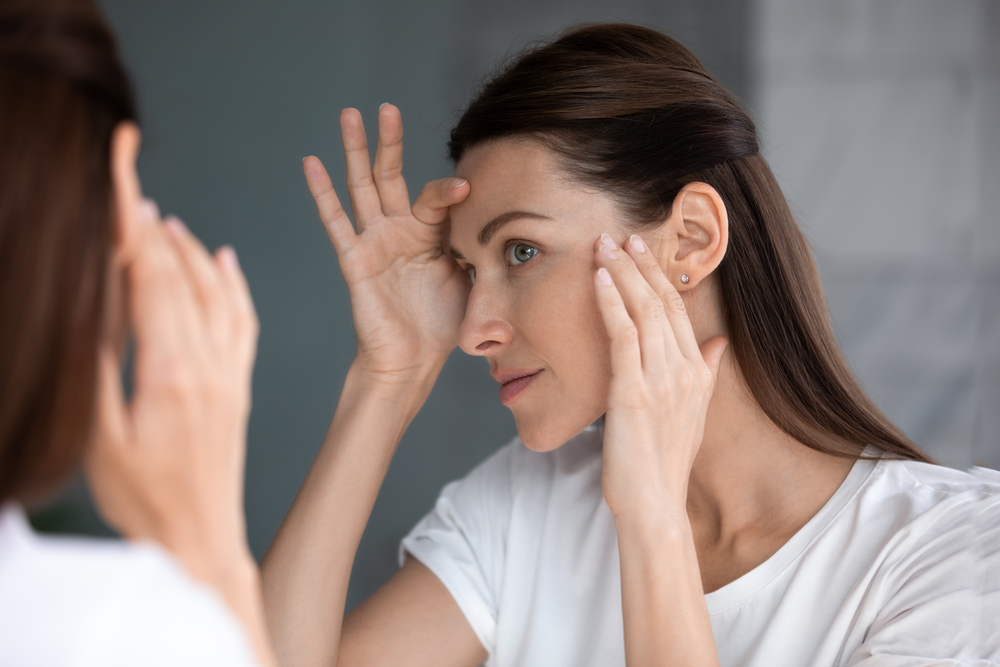
Upper Blepharoplasty Recovery
- Days 1–3: Swelling and bruising peak, eyes may feel tight or heavy. Cold compresses help manage swelling.
- Days 4–7: Bruising begins to yellow and fade, swelling reduces. Sutures are typically removed at days five to seven.
- Days 7–14: Most patients are comfortable returning to normal activities, though makeup over the incision site is not advisable until fully healed.
- Months 1–6: The scar matures and fades. Final results become fully apparent over this period.
Lower Blepharoplasty Recovery
- Days 1–5: Swelling and bruising are more pronounced than upper blepharoplasty. The under-eye area may appear puffy and discoloured.
- Days 5–10: Sutures removed (if external approach used). Bruising fades but residual swelling persists.
- Weeks 2–4: Most social swelling resolves. The area continues to refine over the following months.
- Months 3–6: Final results become fully visible as deeper swelling dissipates and fat repositioning settles.
Activity Restrictions
Following blepharoplasty, patients are typically advised to:
- Avoid strenuous exercise for two to four weeks
- Avoid swimming, saunas, and steam rooms for three to four weeks
- Protect the eye area from sun exposure and apply SPF diligently once healed
- Avoid contact lens use during the initial healing period
- Sleep with the head elevated to reduce swelling
Blepharoplasty Cost in Japan
Estimated Pricing
| Procedure | Estimated Price Range (JPY) |
| Upper blepharoplasty (incisional) | ¥200,000 – ¥500,000 |
| Upper blepharoplasty (non-incisional) | ¥80,000 – ¥200,000 |
| Ptosis correction | ¥250,000 – ¥600,000 |
| Lower blepharoplasty (transconjunctival) | ¥200,000 – ¥450,000 |
| Lower blepharoplasty (subciliary) | ¥250,000 – ¥550,000 |
| Combined upper and lower | ¥400,000 – ¥900,000 |
Prices are approximate and vary by surgeon, clinic, and the complexity of the procedure. Always confirm current pricing and what is included — anaesthesia, facility fees, and follow-up appointments — during the consultation.
What Affects the Cost?
- Surgeon seniority and reputation — senior or highly sought-after surgeons command higher fees
- Technique complexity — ptosis correction and fat repositioning involve greater technical complexity than straightforward skin removal
- Anaesthesia type — local anaesthesia with sedation is less costly than general anaesthesia, and most blepharoplasty procedures in Japan are performed under local with sedation
- Clinic facility — hospital-based surgical suites versus dedicated aesthetic clinic operating theatres
- Inclusion of ancillary procedures — revision consultations, scar treatments, and post-operative care
Selected Clinics for Blepharoplasty in Japan
Considering blepharoplasty in Japan? Tokyo is home to a range of clinics that combine established surgical experience with support services designed for international patients. Below are three Tokyo clinics offering upper eyelid procedures, along with an overview of their approach, treatment options, and how to book a consultation in English.
BIANCA CLINIC
A Multilingual Team for International Guests
BIANCA CLINIC brings together specialists in surgery, dermatology, and internal medicine, and states that its team includes doctors and interpreters fluent in English, Chinese, and Korean.
The clinic offers full interpretation from arrival through treatment, translated consent forms and accepts major credit cards and e-money.
Customized Upper Eyelid Options
BIANCA offers several upper blepharoplasty approaches, including upper eyelid sagging removal, upper eyelid fat removal, sub-brow eyelid lift, and a combined brow lift with ROOF fat removal, each selected in consultation with a surgeon to suit individual eyelid concerns.
Interpretation and counseling for the initial consultation are provided free of charge.
English Support
Multilingual doctors and interpreters, translated consent forms, and 24-hour WhatsApp chat support.
How to Book
Book online via the clinic’s reservation page, or contact via WhatsApp or LINE.
BIANCA CLINIC
UPPER BLEPHAROPLASTY
BLEPHAROPLASTY
| Address | 12F ONE GINZA, 1-8-19 Ginza, Chuo-ku, Tokyo |
| Phone Number | +81-50-3196-4834 |
| Business Hours | 10:00 AM – 7:00 PM |
| Holiday | Irregular |
| Access | A 4-minute walk from Ginza Station on the Tokyo Metro Ginza Line. A 1-minute walk from Exit 7 of Ginza-itchome Station on the Tokyo Metro Yurakucho Line. A 3-minute walk from Exit 3 of Kyobashi Station on the Tokyo Metro Ginza Line. An 8-minute walk from the Kyobashi Exit of JR Yurakucho Station. |
AZABU SKIN CLINIC

Led by an Internationally Affiliated Dermatologist
AZABU SKIN CLINIC is directed by Dr. Chiaki Kawashima, a dermatologist affiliated with the Japanese Dermatological Association and a Fellow member of the American Society for Laser Medicine & Surgery (ASLMS), reflecting ongoing engagement with international dermatology and aesthetic medicine communities.
A Range of Eyelid Techniques
For blepharoplasty, the clinic offers both non-incisional and incisional double eyelid surgery, sub-brow incision, outer/inner canthoplasty, and transconjunctival or transcutaneous blepharoplasty, tailored to conditions such as droopy upper eyelids, ptosis, or a monolid appearance, under the care of a board-certified plastic surgeon.
English Support
An English-language website with treatment details, plus a dedicated phone line for overseas callers.
How to Book
Submit an online counseling reservation form, or call the free-dial number listed on the clinic’s website.
AZABU SKIN CLINIC
Blepharoplasty
| Address | 6F Precious#18 Building, 4-14-6 Minami-Azabu,minato-ku, Tokyo |
| Phone Number | 0120-890-992 |
| Business Hours | 10:00 AM – 7:00 PM (Wed 11:00 AM – 8:00 PM) |
| Holiday | Closed Mondays & Tuesdays |
| Access | 6-minute walk from Hiro-o Station (Tokyo Metro Hibiya Line, Exit 1) |
NAKAO PLASTIC SURGERY

A Family Clinic in Central Tokyo
NAKAO PLASTIC SURGERY is run by Dr. Takashi Nakao and Dr. Sara Nakao, both former members of the Department of Plastic Surgery at Tokyo Women’s Medical University. The clinic offers oculoplastic treatments, including ptosis and eyelid-drooping correction, and is located in the Kamiyacho/Toranomon area of Minato-ku.
Comprehensive Upper Eyelid Care
Upper eyelid options include suture and incision double eyelid surgery, medial epicanthoplasty for the inner eye corner, and sagging-eyelid corrections such as upper eyelid incision, sub-brow lift, temple lift, and forehead/brow lift, chosen based on individual anatomy and consultation.
English Support
An English-language website detailing treatments, pricing, and clinic information for international visitors.
How to Book
Reserve via the clinic’s online form or call the clinic directly.
NAKAO PLASTIC SURGERY
Upper Blepharoplasty and Double Eyelid Surgery
| Address | Toranomon Waiko Bldg. 1F, 5-12-1 Toranomon, Minato-ku, Tokyo |
| Phone Number | +81 03-6435-8720 |
| Business Hours | Mon, Wed–Fri 9:00–13:00 & 14:00–18:00; Sat 9:00–13:00 only |
| Holiday | Tuesdays, third Saturdays, Sundays, national holidays |
| Access | A 30-second walk from Kamiyacho Station Exit #1 (Tokyo Metro Hibiya Line) |
Frequently Asked Questions
Is blepharoplasty permanent?
Incisional upper blepharoplasty produces permanent results — the crease and the correction of excess skin are lasting. However, the ageing process continues, and some patients choose revision surgery many years later as skin continues to change.
Lower blepharoplasty results are also long-lasting, though further ageing will occur over time.
What is the difference between blepharoplasty and double eyelid surgery?
Double eyelid surgery is a specific type of upper blepharoplasty focused on creating an upper eyelid crease. Standard blepharoplasty may or may not involve crease modification — its primary aim is typically correction of excess skin, fat, or ptosis.
In Japan, both terms are used, and the distinction matters for accurate expectation-setting during consultation.
Can I get blepharoplasty in Japan as a tourist?
Yes, though planning is essential. International patients should allow adequate time for a pre-operative consultation (ideally in person, though some clinics offer pre-consultation via video), the surgery itself, and the initial recovery period — a minimum of two weeks in Japan is advisable for most blepharoplasty procedures.
Follow-up care should be arranged either in Japan or with a practitioner in the patient’s home country.
Will the results look natural on non-Asian eyes?
This depends entirely on the surgeon’s experience with non-Asian eyelid anatomy. In Japan, the majority of blepharoplasty cases involve Asian eyelids, so confirming that your surgeon has experience with your specific eyelid anatomy and aesthetic goals is important.
Reviewing before-and-after photographs of patients with similar ethnic backgrounds is the most reliable way to assess this.
What are the risks of blepharoplasty?
As with all surgery, blepharoplasty carries risks including bleeding, infection, scarring, asymmetry, dry eye, and — rarely — more serious complications affecting vision or eyelid function.
Choosing a board-certified plastic or ophthalmic surgeon with specific experience in periorbital surgery significantly reduces these risks. A thorough informed consent process should cover all risks before any procedure is confirmed.
Final Thoughts
Japan offers a genuinely strong environment for blepharoplasty — surgeons experienced in a wide range of eyelid presentations, high standards of surgical care, and an aesthetic culture that values precision and natural results.
For international patients, the key to a successful outcome is thorough research, a detailed in-person consultation, and realistic planning around the recovery period.
Eyelid surgery is one of the highest-impact aesthetic procedures available — subtle when done well, and transformative when the result is right for the individual. In the right hands, blepharoplasty in Japan can deliver exactly that.
| ・This website provides general knowledge about aesthetic medicine from a neutral perspective as much as possible. Please note that the information is not intended to encourage self-diagnosis. Be sure to check the official website of the clinic and consult each medical institution for details regarding treatment. ・This article is based on information available at the time of writing and publication. Please check the official website for the latest updates. ・If cosmetics or massage-related content is mentioned, it is not within the scope of medical supervision. |