Color changes after an aesthetic treatment are a recognized topic in clinical practice, and the useful time to discuss them is before anything is booked.
This article covers what to raise at the consultation, what history informs that discussion, what to document during recovery, and how follow-up works if you are travelling. It does not diagnose, name a cause for anything you are seeing, or describe how any change should be treated.
There is no universal best option, and anything unexpected needs assessment by a clinician rather than interpretation from an article.


INDEX
- Why Color Changes Should Be Discussed Before Treatment
- What History to Share: Prior Marks, Inflammation, and Reactions
- Treatment Options You May Encounter in Japan
- How to Ask About Expected Recovery and Warning Signs
- What to Document for Follow-Up
- Choosing a Clinic: English Communication and Transparent Case Information
- When to Contact the Clinic or Seek Medical Care
- FAQs
Why Color Changes Should Be Discussed Before Treatment
Pigment change following inflammation or a procedure is a well-described consideration in the dermatology literature and a normal part of treatment planning conversations 1. It is not an unusual thing to raise, and raising it does not mark you as a difficult patient.
There are two reasons to have the conversation early. The first is that your own history is the most useful information available on this topic, and it can only change a plan if it is known before the plan is made.
The second is practical: knowing in advance what would be expected, what would not, and who to contact means you are not trying to work that out later, possibly in another country and another timezone.
Discussing it before also sets a realistic frame. Skin does not respond identically in every person, and part of a careful consultation is hearing where a clinician expects variation and what they would watch for.
A conversation that acknowledges uncertainty is more useful than one that promises none.
A note on scope: this article is about preparing for and documenting a conversation with a clinician. It cannot tell you what any particular change is, how long it will last, or what should be done about it. Those are clinical questions requiring examination.
If pigment is your primary concern rather than a side consideration, the underlying discussion may be a different one; what to expect when discussing melasma treatment in Tokyo covers how one common pigment concern is approached.
Your history is the part of this conversation that no clinician can obtain by looking at you.Marks left after inflammation.
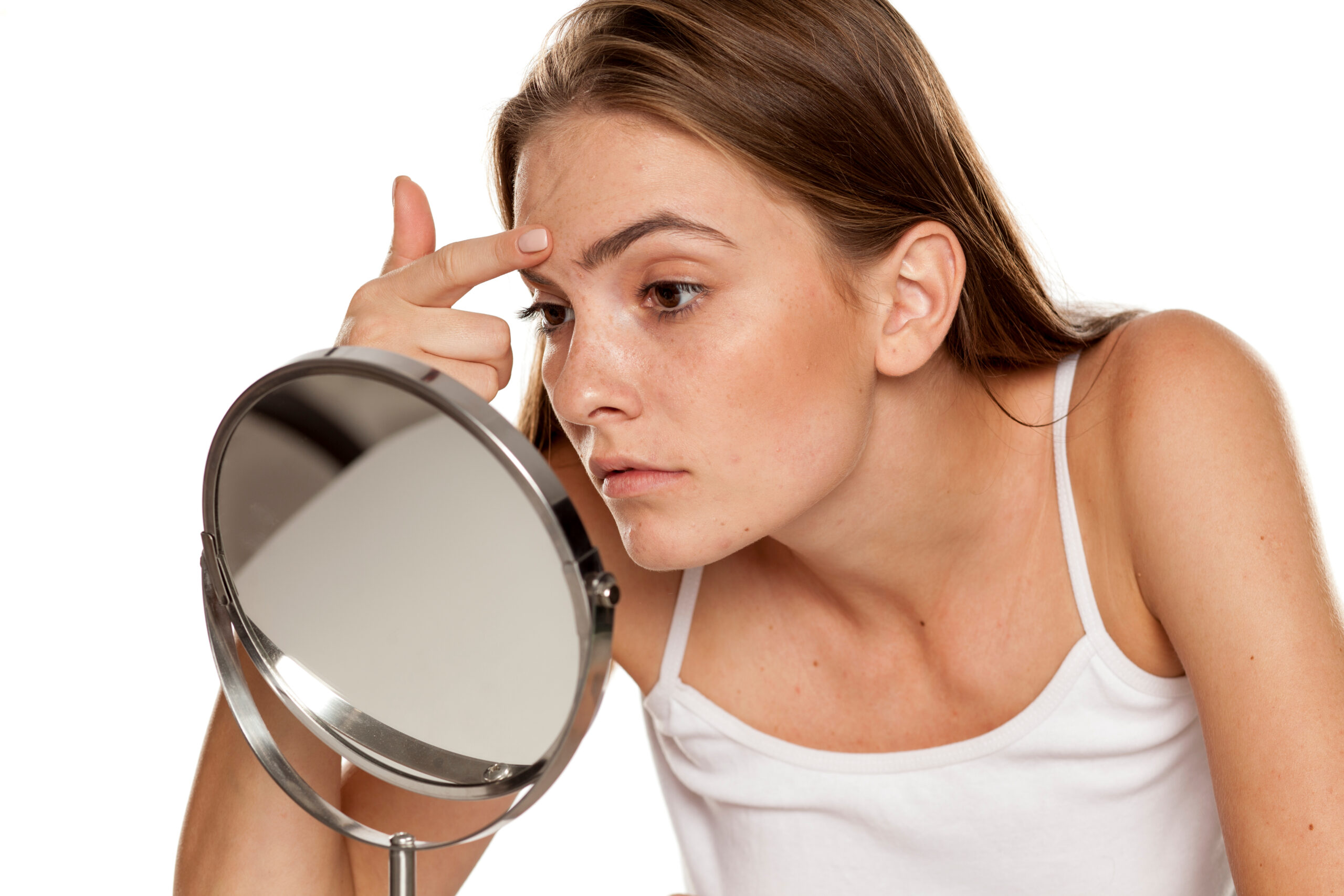 After acne spots, cuts, burns, insect bites, or friction — did the area darken, lighten, or neither? How long did it take to fade, and is anything still visible? Approximate answers are fine; the pattern matters more than precision.
Inflammatory skin conditions
Eczema, psoriasis, dermatitis, rosacea, or anything that flares — and how your skin looked once a flare settled.
Pigment changes tied to hormones
Patches that appeared or darkened during pregnancy or while taking hormonal medication, and whether they changed afterward.
Prior procedures
Category, roughly when, how many sessions, and how your skin behaved afterward — particularly anything that took longer to settle than you were told to expect, or left something behind.
Product reactions
Anything that caused burning, prolonged redness, or peeling you did not anticipate. Photograph the labels of what you currently use, including prescriptions; brand names differ between countries.
Medications, health history, and current status
Including recent isotretinoin use if applicable, and pregnancy or breastfeeding where relevant.
Sun exposure
How your skin typically responds, how consistent your protection actually is, and where you are travelling next.
Bring this written down in English, and bring unedited photographs taken in natural light without make-up.
If acne is part of the picture, the interaction between active breakouts, scarring, and pigment planning is worth understanding in advance — see HydraFacial and acne-scar treatment planning in Tokyo for how those conversations tend to be structured.
Treatment Options You May Encounter in Japan
These categories come up when recovery and pigment considerations are discussed. They are listed so you recognize terminology in a consultation, not as a menu, and not in any order of preference.
 Nothing here is presented as a response to a pigment change you may already be experiencing — that is a clinical question requiring examination.
Treatment availability, product and device status in Japan, clinician technique, treatment protocol, cost, recovery, and individual suitability can vary.
A product or device name alone does not determine whether an option is appropriate for you. Confirm current details directly with the treating clinic.
| What readers commonly want to discuss | Examples readers may encounter in Japan | Questions to ask in consultation | Travel / follow-up considerations |
|---|---|---|---|
| Uneven tone and pigmented areas | Laser and light-based treatments such as Pico laser | Given my history, which pigment-related risks are material, and how would they be recognized? | How strictly must sun exposure be limited afterward, and for how long? |
| Texture and acne scarring | RF microneedling such as POTENZA; fractional approaches | What is the expected recovery pattern, and what falls outside it? | What is visible on the days I am travelling? |
| Surface renewal and dullness | Chemical peels, including glycolic acid or salicylic acid macrogol peels | How does this interact with the products I already use? | Can anything I am given be continued at home? |
| Clinician-supervised home care | Hydroquinone- or retinoid-based topical plans under supervision | What is this for, how is it monitored, and when is it reviewed? | Can this be obtained or continued after I leave Japan? |
| Skin that has reacted unexpectedly before | Any of the above, planned conservatively or staged | What would make you postpone or take a more cautious approach? | Who reviews my skin once I have left the country? |
How to Ask About Expected Recovery and Warning Signs
“Minimal downtime” is not information. What you need is a description specific enough that you could recognize a departure from it.
Ask what is expected day by day: what will be visible, for how long, and what typically changes during the first week and the weeks after.
Ask what the clinician considers within the expected range, and — separately — what would prompt them to want to see you. Ask them to put both in writing, in English.
Ask what restrictions apply and for how long: sun exposure, make-up, exercise, heat, and which skincare products to pause.
Ask whether anything you currently use should stop before the appointment, and when it can resume.
Ask about timing relative to your trip. A recovery pattern that is unremarkable at home may be inconvenient on a flight or at an event, and a clinician can only account for that if they know your dates.
| Questions to raise before treatment |
|---|
| 1. Given my history, which pigment-related risks are material in my case? |
| 2. What is expected day by day during the first week, and over the weeks after? |
| 3. What would fall outside the expected range, and what would you want me to do then? |
| 4. What restrictions apply to sun, make-up, exercise, and skincare, and for how long? |
| 5. What will I be given in writing, and will it be in English? |
| 6. How do I reach you after I leave Japan, and what response time is realistic? |
| 7. If something appears once I am home, what would you advise me to do locally in the meantime? |
| 8. What is included in the price if follow-up or review is needed? |
What to Document for Follow-Up
Documentation is what makes remote follow-up possible. Without it, a clinician reviewing your case from another country is working from a description of something they cannot see.
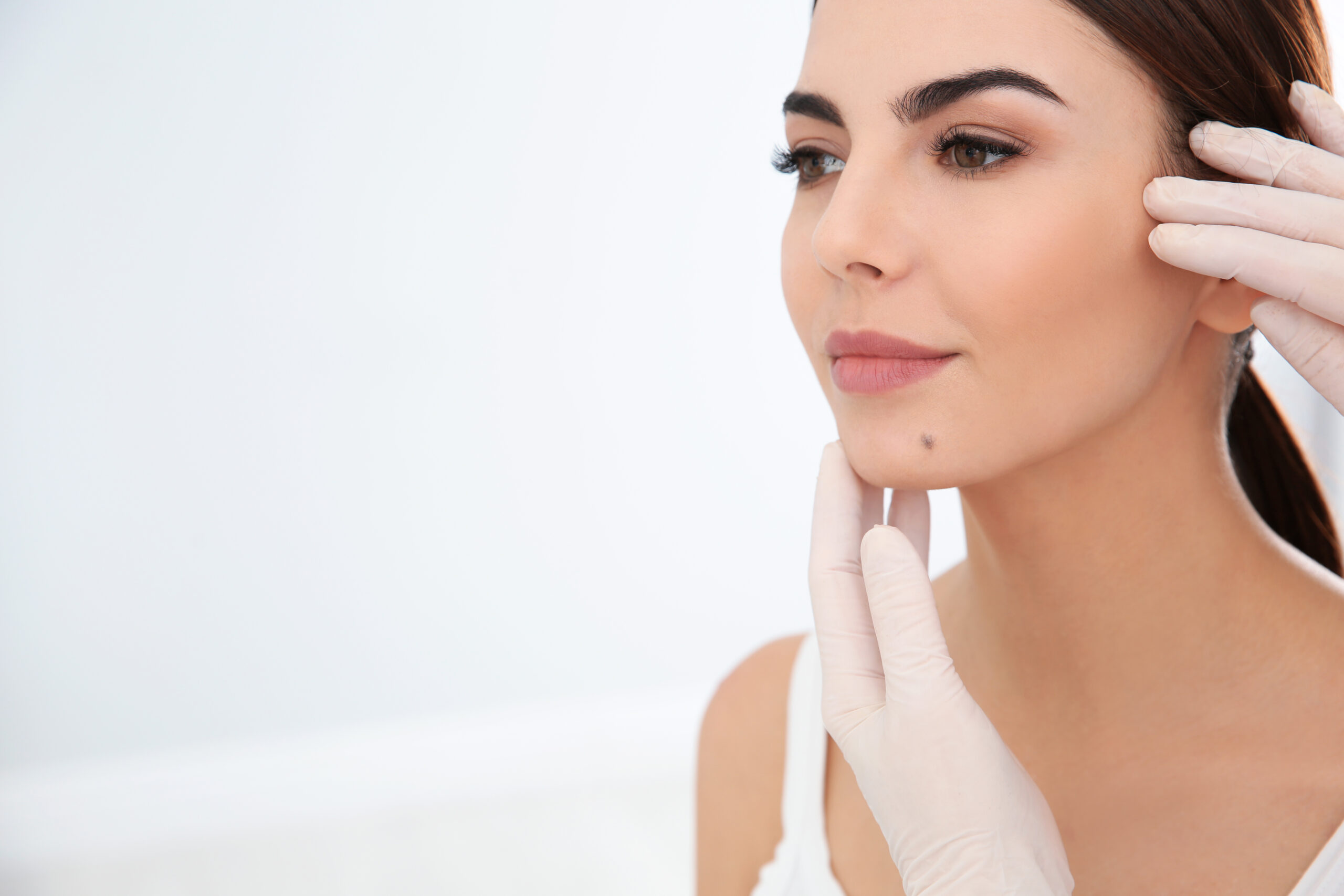
Photographs are the core of it. Take them in consistent conditions: the same light source, ideally natural and indirect, the same distance and angle, no make-up, no filters, and no editing. Same time of day helps.
A reference point in frame — a hairline, the corner of an eye — makes comparison easier than a close crop with no context.
Take a set before the treatment, not only afterward. It is the comparison that carries information, and after the fact it cannot be recreated.
Alongside the images, keep short dated notes: what you noticed and when, what you applied, any change in restrictions, and anything that departed from what you were told to expect.
Keep the written aftercare instructions and the treatment record — including the treatment category and session details — with them.
None of this is for self-assessment. It is material for the clinician, and the point of collecting it consistently is that it remains useful whether the review happens in the clinic or by email six weeks later.
Choosing a Clinic: English Communication and Transparent Case Information
If you decide to compare clinics, prioritize clinics that can explain your assessment, treatment alternatives, risks, written aftercare, and follow-up contact in English or through a qualified interpreter.
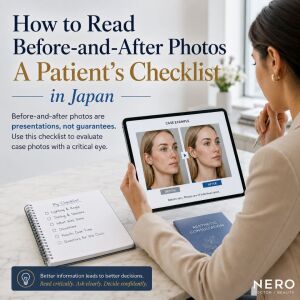
Ask whether they can show relevant case information transparently — including the treatment category, number of sessions, timing of photographs, expected downtime, and material risks — without presenting another person’s result as a guarantee of yours.
On this topic specifically, notice how a clinic handles the parts that are less flattering. Case information that never shows an intermediate stage, never describes downtime, and never mentions material risks is telling you about the presentation rather than the treatment.
Check whether the treatment category and session count are stated, when photographs were taken relative to treatment, whether lighting, angle, and make-up are consistent, whether other procedures were performed at the same time, and whether individual variation is described.
Another person’s result is not evidence of what your skin will do.
| Questions to ask before choosing a clinic |
|---|
| 1. Who will explain my assessment, options, risks, and aftercare in English, and how will interpretation be handled if needed? |
| 2. How will you assess my current skin condition, previous reactions, medical history, and treatment goals? |
| 3. Which treatment categories are being considered, what alternatives exist, and why might you recommend waiting or choosing a different approach? |
| 4. Can you show relevant case information with the treatment category, number of sessions, photo timing, expected downtime, and material risks clearly stated? |
| 5. Will I receive written aftercare instructions in English and a way to contact the clinic after I leave Japan? |
| 6. What is included in the quoted cost, and are there any product, device, or regulatory details I should confirm for my plan? |
When to Contact the Clinic or Seek Medical Care
The short version: the threshold for contacting the treating clinic should be set by the clinic, in advance and in writing, and you should use it rather than trying to interpret what you are seeing yourself.
This article cannot tell you what any change means or how urgent it is, and general information is a poor substitute for examination. What it can say is that anything painful, worsening, spreading, or otherwise concerning is a reason for appropriate clinical assessment rather than a reason to wait and see.
If you are no longer in Japan, that means being seen where you are — a reply from abroad can follow, but it should not be what you are waiting on.
Ask the clinic before you travel home how they want to be contacted, in what language, and what response time is realistic. Ask what they would suggest you do locally in the meantime if something arises.
Some clinics can review photographs remotely; that is useful for continuity, and it is not the same as an examination.
Some skin conditions are managed over time rather than resolved, and expectations for follow-up differ accordingly — what to know about rosacea treatment in Japan illustrates that longer-horizon framing.
If you do not have a clinician where you live, arranging one before you need one is easier than arranging one during a concern.
FAQs
Is pigment change after a procedure something everyone should expect?
No, and it is not something to predict from general information either.
Whether it is a material consideration for you depends on your individual history and the approach being discussed.
Raise it at the consultation and ask how it applies to your case.
I noticed a color change after a treatment. What is it?
That cannot be answered without an examination, and this article will not attempt it.
Contact the treating clinic using the arrangement you agreed in advance, and seek assessment where you are if it is painful, worsening, or otherwise concerning.
Should I start a brightening product I already have at home?
Not on your own initiative. Products that seem harmless can complicate both the situation and the assessment.
Ask the treating clinic or a clinician who can examine you before adding anything.
How long should I keep documenting?
Ask the clinic what review period applies to your treatment, and keep the photographs and notes at least through it.
Consistency matters more than frequency — an occasional set taken in the same conditions is more useful than daily images taken in varying light.
References
| ・This website provides general knowledge about aesthetic medicine from a neutral perspective as much as possible. Please note that the information is not intended to encourage self-diagnosis. Be sure to check the official website of the clinic and consult each medical institution for details regarding treatment. ・This article is based on information available at the time of writing and publication. Please check the official website for the latest updates. ・If cosmetics or massage-related content is mentioned, it is not within the scope of medical supervision. |