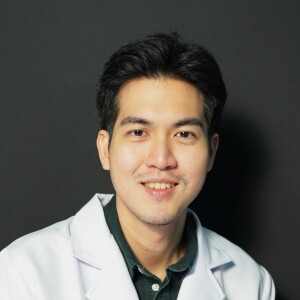
Medical Director, Bibi Clinic
Dr.Ittipat Piyajitti
Commonly known as Dr. Jam. After working as a general practitioner at a general hospital, he completed a forensic medicine residency program at the National Police Hospital. He currently works full-time at the National Police Hospital, where he performs autopsies and serves as an expert witness in criminal trials. In addition, he serves as Medical Director at Thailand’s “Bibi Clinic,” which incorporates Japanese aesthetic sensibilities. He is highly regarded for his expertise in thread lifts and hyaluronic acid injections.
Botox Bangkok is no longer just about erasing wrinkles.
Today, more people are seeking subtle, natural-looking results that enhance overall facial balance — without sacrificing the expressions that make them uniquely themselves.
The era of dramatic transformation is giving way to something more refined: beauty that’s felt, not noticed.
However, achieving that ideal depends not only on the choice of products but also—and perhaps even more so—on the doctor’s injection technique and their ability to design the overall facial appearance.
That is precisely why you cannot compromise when choosing a clinic.
In this article, we interviewed a doctor at Bibi Clinic, a clinic in Bangkok, Thailand, that is currently attracting significant attention.
We delved into the clinic’s treatment philosophy and the essence of its “Japanese-style approach” that pursues natural beauty.
Along with the latest global trends in Botox, we explore in detail the clinic’s commitment to “Botox that enhances facial expressions.”


INDEX
- Beyond Wrinkle Smoothing: Why Botox Bangkok Trends Are Shifting Toward Facial Balancing
- The Japanese Approach to Botox — Precision, Subtlety, and Balance
- Botox Areas: Where Injections Are Commonly Used for Natural Enhancement
- Botox Bangkok at Bibi Clinic: Experience Natural Rejuvenation with a Japanese Touch
Beyond Wrinkle Smoothing: Why Botox Bangkok Trends Are Shifting Toward Facial Balancing
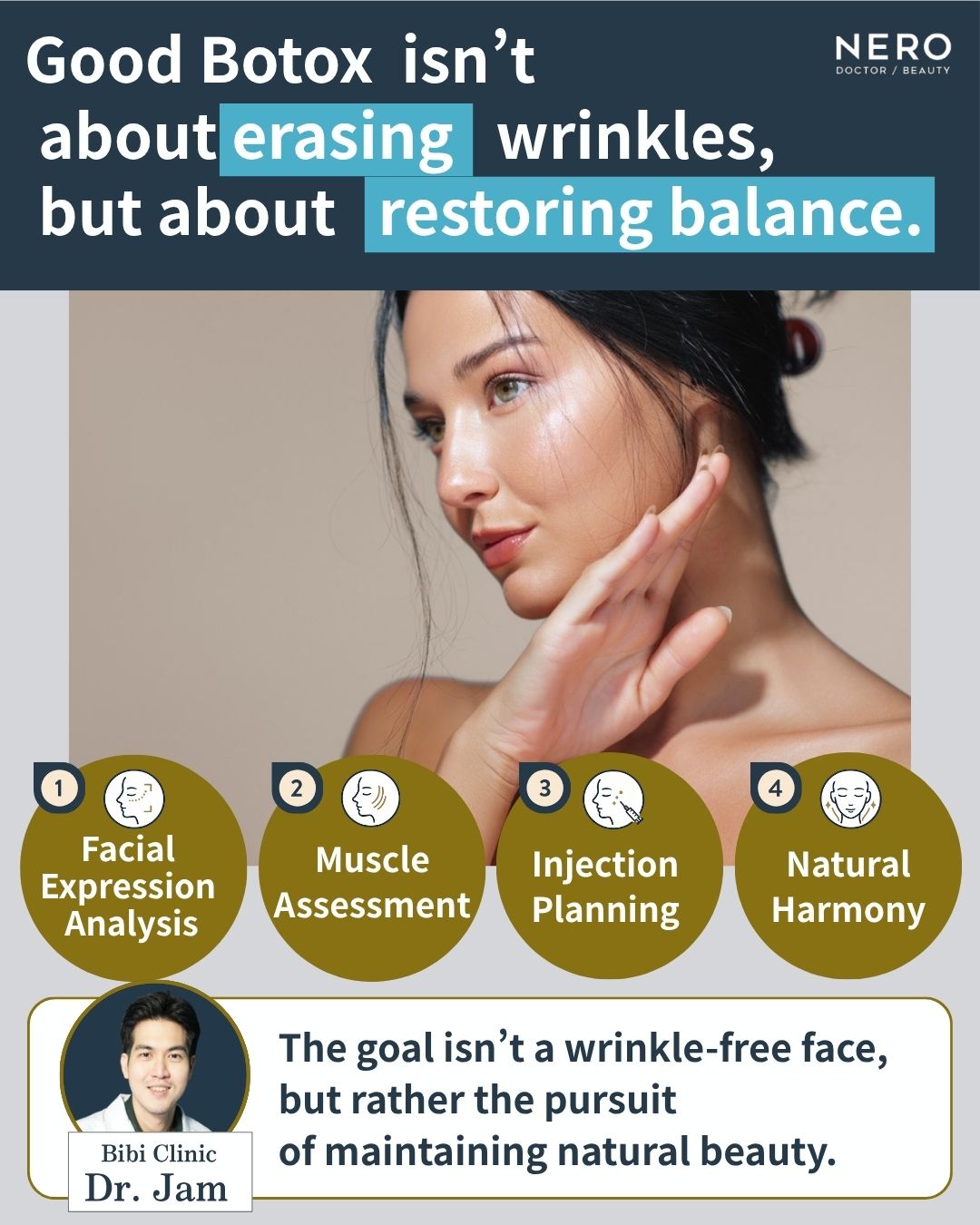
Many people are interested in Botox injections but hesitate, wondering: “Will my expressions disappear?” or “I don’t want to look unnatural.”
These concerns are completely understandable.
However, today’s Botox treatments look very different from what many people imagine.
Designing treatments aimed at harmonizing the entire face — rather than simply erasing every wrinkle — is rapidly becoming the global standard.
In this section, we explore how the trends surrounding Botox have shifted, and what the concept of facial balancing really means.
Moving Away from the “Frozen“ Look to Facial Harmony: How Botox Has Evolved
Botox injections are a medical procedure in which a formulation containing a protein derived from Clostridium botulinum is injected into muscles to temporarily reduce excessive muscle movement.
It is used for a wide range of purposes, such as improving expression lines and addressing a square jawline (enlarged masseter muscles), and one of its key features is the relatively short downtime since it does not involve surgery.
Please see below for detailed information on the procedure and risks associated with Botox injections.
Bibi Clinic Botox Injections Details Page
When Botox first became popular, the procedure was often considered a success if it completely erased noticeable wrinkles or produced dramatic, visible changes.
However, there were many cases where excessive suppression of muscle movement resulted in “awkward smiles” or “a lack of facial expression.”
As these examples began to be shared on social media, more people started to worry that “Botox might make me look unnatural.”
In recent years, however, this trend has shifted significantly worldwide.
Even among overseas celebrities and influencers who once favored dramatic changes, there has been a growing movement to openly discuss “moving on from excessive cosmetic procedures” and “regrets over past unnatural treatments.”
As a result, an increasing number of people among the general public are now thinking, “I want to avoid looking overly artificial” and “I want to become naturally beautiful in a way that goes unnoticed by those around me.”
“The demand itself is shifting from ‘cosmetic procedures that alter specific features’ to ‘cosmetic procedures that harmonize the entire face.’ In fact, Bibi Clinic reports that they are also sensing this shift in patients’ values.”
It’s not just people in their 30s and 40s; we’re also seeing more patients in their 20s coming in to prevent future wrinkles.
As a result, the majority of our patients now prioritize a healthy and natural-looking result.
The desire to look youthful and vibrant while preserving one’s own natural expressions is reshaping the way modern Botox treatments are approached.
Today, the focus is on a more refined technique — not stopping muscle movement entirely, but thoughtfully controlling only what needs to be controlled.
Botox is now being recognized not simply as a wrinkle treatment, but as a form of medical care that helps people age beautifully while honoring their natural expressions and individuality.
Botox Areas and the Concept of Facial Harmony
As the demand for natural results has grown, the way Botox is used has changed significantly.
In the past, treatments were primarily focused on targeting specific concerns in isolation — a single area like the forehead or glabella.
Today, however, the thinking has broadened to encompass botox areas across the whole face — including the jaw, mouth corners, and facial contours — combining multiple sites to achieve overall balance.
Botox has evolved from a localized fix into a medical tool for designing facial harmony.
Understanding the botox areas of face is essential to this approach.
Our facial muscles don’t operate independently — they work together in complex, interconnected ways to create expression.
When one muscle is weakened, others may compensate by working harder. For example, treating only the forehead can sometimes place increased strain on the glabella or crow’s feet, making those areas more prominent.
Similarly, botox injection areas on face such as the jaw can subtly alter how the cheeks and lower face appear.
Modern Botox treatment requires calculating these interactions — precisely controlling the balance of the mouth corners, the height of the brows, and the harmony of movement across botox areas on face.
The goal is not just to look good in a still photo, but to move beautifully in everyday life — while smiling, talking, and expressing emotion.
On the other hand, misjudging the dosage or injection site can lead to problems such as asymmetry between the left and right sides, unnatural facial expressions, or heavy-looking eyelids.
Understanding where should botox not be injected — the so-called botox danger zones — is just as important as knowing where to treat.
The outcome of any Botox treatment depends deeply on the physician’s design expertise and experience.
When choosing a clinic in Bangkok, finding a doctor who takes the time to carefully plan “where, how much, and for what purpose” to inject is the surest path to achieving natural and satisfying results.
Every person’s facial muscles move differently.
That’s why I prioritize carefully observing each patient’s expressions during consultation and creating an injection design that is truly unique to them.
In the next section, we’ll take a closer look at the Japanese approach to Botox — built on this philosophy of precision design — and what makes Bibi Clinic’s treatments stand out in Botox Bangkok.
Book Your Natural-Look Botox
Consultation at Bibi Clinic
The Japanese Approach to Botox — Precision, Subtlety, and Balance
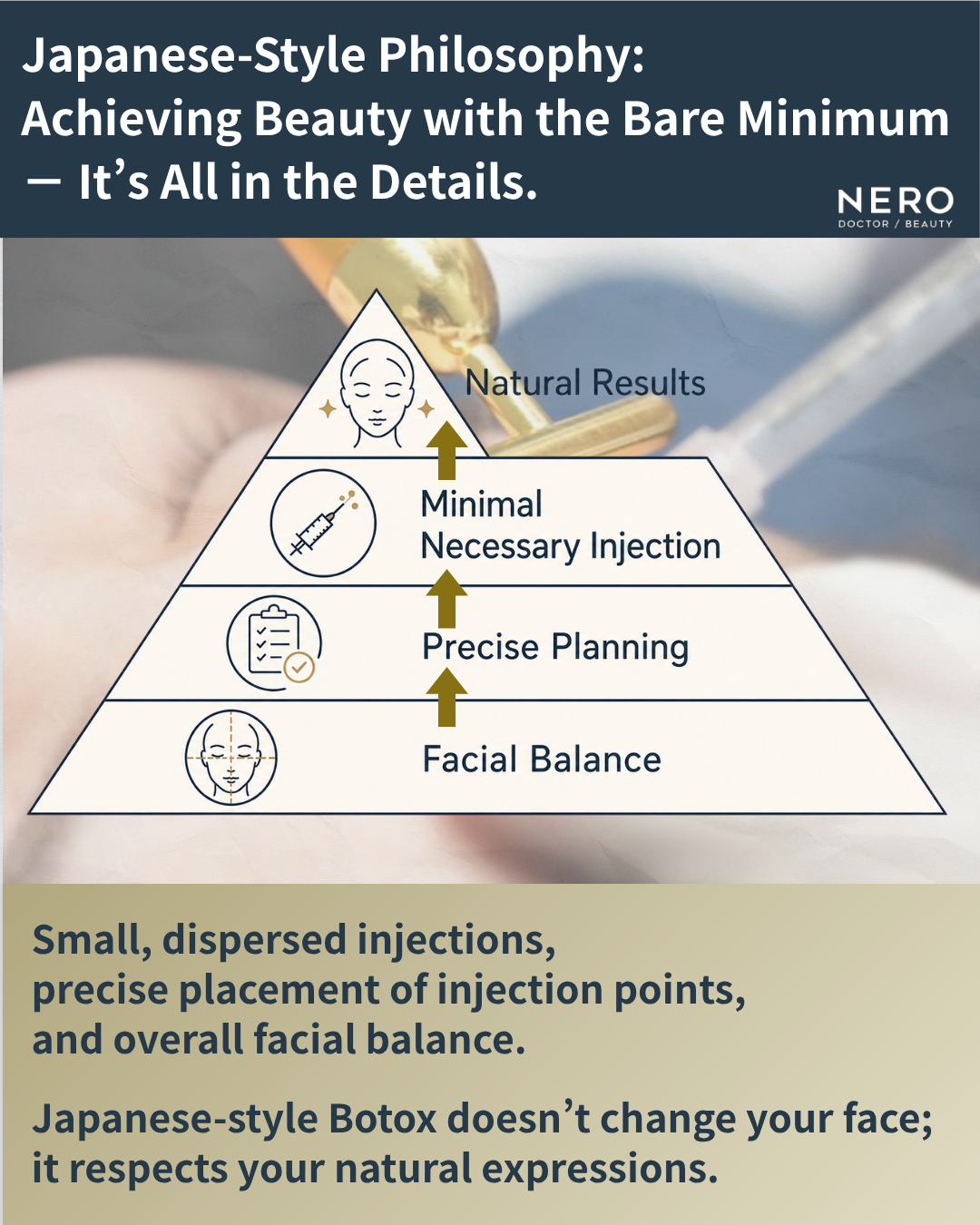
As patient demand for “natural-looking results” continues to grow, the Japanese approach—known for its delicate results—is gaining attention.
Unlike treatment styles that aim for “dramatic transformations,” this approach centers on an aesthetic that focuses on refining and balancing the face by removing excess, with an emphasis on bringing out the face’s inherent harmony.
In this section, we’ll introduce the philosophy behind the Japanese approach and the commitment to treatment at Bibi Clinic, which embodies this philosophy in Botox Bangkok.
What Makes the Japanese Aesthetic Approach Different?
At the core of Japanese aesthetic medicine lies the “aesthetics of subtraction”—a philosophy focused on bringing out a person’s inherent beauty rather than making drastic changes to specific features.
Rather than adding volume to emphasize changes, we create harmony across the entire face by “subtracting and refining” facial habits and excess muscle tension.
For this reason, as introduced in the previous chapter, Japanese-style Botox emphasizes an approach that maintains an overview of the face’s overall balance while limiting injections to the absolute minimum in each area.
Even when treating multiple areas, strictly adhering to the principles of “small doses and precision” in each case results in a natural harmony overall.
“Your overall appearance has softened,” “You look slimmer and younger than before”—bringing about such natural changes that are difficult for others to notice is a major characteristic of Japanese-style Botox.
Furthermore, the Japanese approach places great importance on customized designs that take into account each individual’s unique skeletal and muscular characteristics.
According to Dr. Jam, there are differences in anatomical tendencies between Asians and Westerners;
for example, Asians tend to have more developed masseter muscles, while their forehead muscles are relatively thinner.
Mapping out this design shot by shot, accounting for each person’s unique muscle movement and facial structure, is one of the true strengths of the Japanese aesthetic method — and a key reason why the facts about botox injections—especially regarding safety and outcomes—can vary so significantly from one clinic to another.
The forehead and eye area, in particular, are areas where differences in technique are easily apparent.
That’s why, before treatment, we ask patients to make various facial expressions to meticulously analyze their muscle habits.
We aim for a beautiful, harmonious finish that looks natural, while making the most of each individual’s unique features.
This deep understanding of individual difference, combined with meticulous design, is what enables the kind of natural outcome that uniform, one-size-fits-all treatments simply cannot achieve.
The reason the Japanese approach places such value on precision and subtlety is, at its core, a commitment to honoring the unique beauty each person already holds.
Bibi Clinic’s Botox in Bangkok: Japanese Standards, Thai Expertise
Bibi Clinic is a Bangkok clinic that puts the Japanese design philosophy into practice under the technical supervision of BIANCA CLINIC — one of the leading names in Japanese aesthetic medicine.
By learning and embodying the Japanese principle of minimal, precision-based injection, Bibi Clinic’s Thai physicians bring the quality of Japanese Botox to patients seeking Botox Bangkok treatments, without the need to travel to Japan.
The clinic’s commitment to quality extends to the formulations it uses.
Bibi Clinic offers two trusted, authenticated products: Botox Vista by US-based Allergan — one of the world’s most widely used botulinum toxin brands — and NABOTA, a high-purity Korean formulation that holds approvals from both the US FDA and Korea’s KFDA.
In a market like Bangkok’s, where concerns about counterfeit products and inconsistent quality control have been raised, the use of verified, FDA-approved Botox areas-compliant formulations is an important factor when evaluating any Bangkok clinic.
“Botox Vista” has moderate diffusion, making it suitable for treating relatively large areas. On the other hand, “NABOTA” has minimal diffusion, making it ideal for areas that require more precise control, such as the eye area, corners of the mouth, and brow lifts.
We place great importance on carefully explaining the characteristics, duration of effect, and cost differences of each product so that patients can make an informed choice.
Furthermore, the clinic starts with a small amount during the initial session and offers free touch-ups as needed.
Additionally, during follow-up visits, the same doctor continues to oversee examinations and treatments whenever possible, allowing them to monitor each patient’s progress over the long term and help maintain a natural-looking result.
The clinic is conveniently located about a 3-minute walk from the nearest BTS station, making it easy to visit—another key attraction.
This commitment to Japanese-quality standards and meticulous follow-up care are likely the reasons why Bibi Clinic has garnered such strong support from many patients.
Book Your Japanese-Style Precision Botox
Consultation at Bibi Clinic
Botox Areas: Where Injections Are Commonly Used for Natural Enhancement
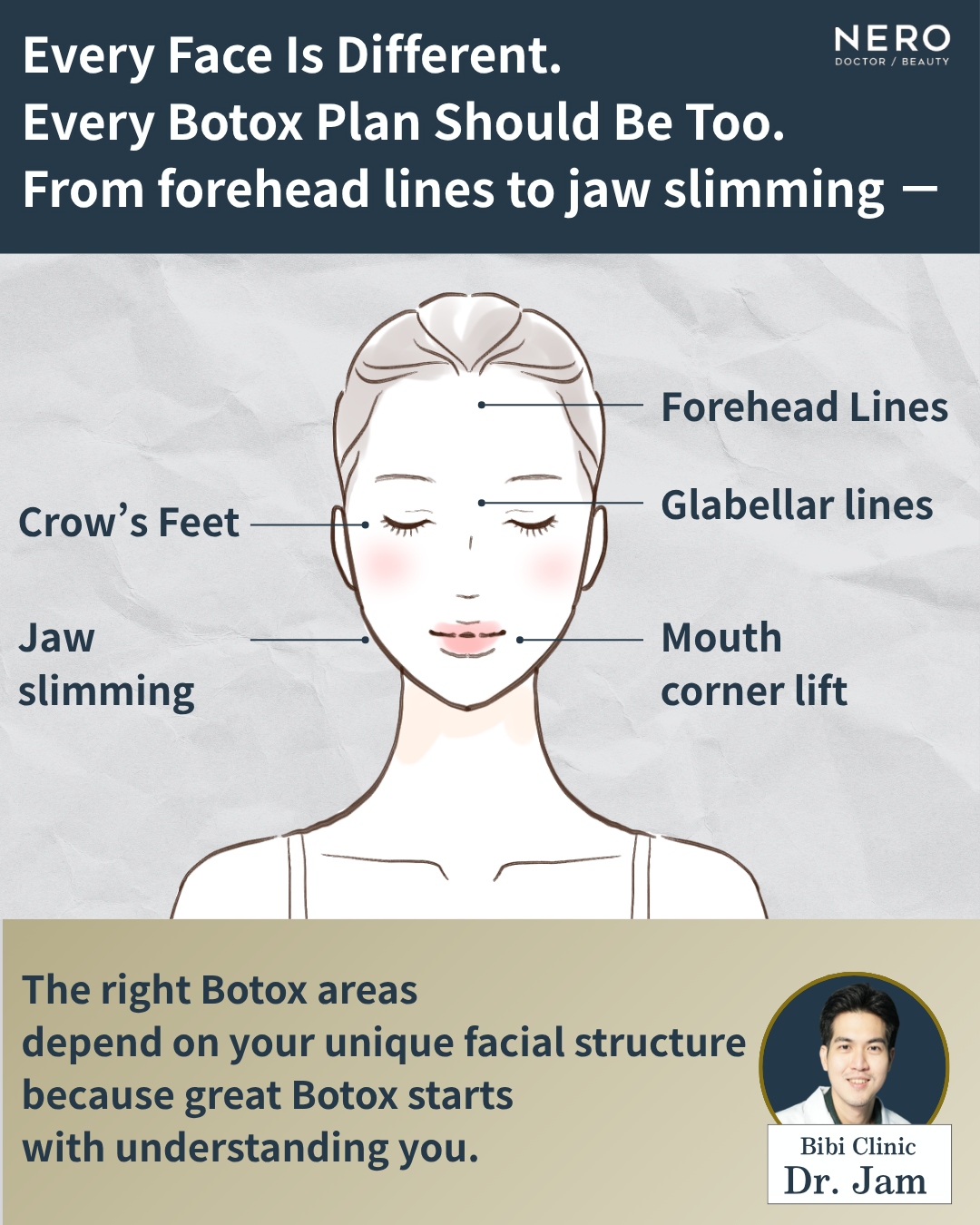
As your understanding of Botox grows, you may be wondering, “Which areas should I treat?” or “Which areas are best suited for my specific concerns?”
As mentioned earlier, it’s important to plan Botox treatments while considering the overall balance of the face.
However, the first step toward a more productive consultation is to familiarize yourself with the characteristics of each area and the key points of treatment.
In this section, based on insights from Dr. Jam, we’ll outline the most common treatment areas discussed at Bibi Clinic, along with the specific concerns, treatment approaches, and precautions for each.
A Quick Guide to the Most Requested Botox Areas
According to Dr. Jam, the botox areas that come up most consistently — regardless of nationality — are the glabella, forehead, and crow’s feet.
Below is a practical guide to the most commonly treated botox areas for face, including the target concern, the muscle involved, and the key design considerations for each.
| Treatment Area | Target Concern | Muscle Targeted | Key Design Considerations |
| Forehead lines | Horizontal expression lines | Frontalis muscle | One of the most technically demanding botox areas on face
— too much volume risks drooping brows and a heavier appearance around the eyes. Careful calibration of depth and dosage is essential. |
| Glabellar lines | Vertical frown lines between the brows | Corrugator supercilii, procerus | Among the most requested botox injection areas on face globally.
Effective for softening the “stern” or “tired” impression created by deep 11 lines, while preserving natural expression. |
| Crow’s feet | Radiating lines at the outer corners of the eyes | Orbicularis oculi (lateral) | A delicate area within the botox areas around eyes
— fine-tuned dosage is required to soften lines while keeping the natural warmth of a genuine smile intact. |
| Jaw slimming (masseter) | Jaw prominence, teeth grinding, facial tension | Masseter muscle | Particularly high demand among Asian patients.
Relaxing the overdeveloped masseter creates a slimmer, more defined facial contour — one of the most transformative botox areas for overall facial balance. |
| Mouth corner lift | Downturned mouth corners, flat or unhappy-looking expression | Depressor anguli oris (DAO) | Belongs to the botox areas around mouth
— eases the muscle that pulls the corners downward, creating a naturally lifted, brighter expression. Preventing asymmetry requires thorough pre-treatment assessment. |
Beyond these core botox sites of injection, Botox can also be applied to a wide range of additional areas, including:
- Bunny lines — the fine lines that appear across the nose bridge when smiling
- Nose tip (nose slimming) — to refine the appearance of the nose tip
- Neck (Nefertiti lift) — to address vertical neck bands
- Shoulders — to ease chronic tension and create a softer shoulder line
- Underarms — for hyperhidrosis (excessive sweating)
- Chin (mentalis) — to smooth a dimpled or “orange peel” chin texture
With so many areas botox can be injected, it’s natural to feel uncertain about where to begin — or whether treating 2 areas, 3 areas, or more at once is the right approach for you.
In reality, the priority areas vary depending on your age, specific concerns, and natural expression habits, and building a sustainable plan that factors in budget and maintenance frequency is just as important as the treatment itself.
At Bibi Clinic, physicians take the time to listen carefully to each patient’s concerns, goals, and budget before recommending a prioritized combination of botox areas.
Starting with the area of greatest concern and gradually expanding the scope as needed is always a valid and flexible option — and one the clinic actively supports.
Creating a treatment plan that works for your life is the first and most important step toward aesthetic care you can sustain with confidence.
Treatment Cases
Here are some case studies of Botox treatment at Bibi Clinic.
<Treatment Cases①>
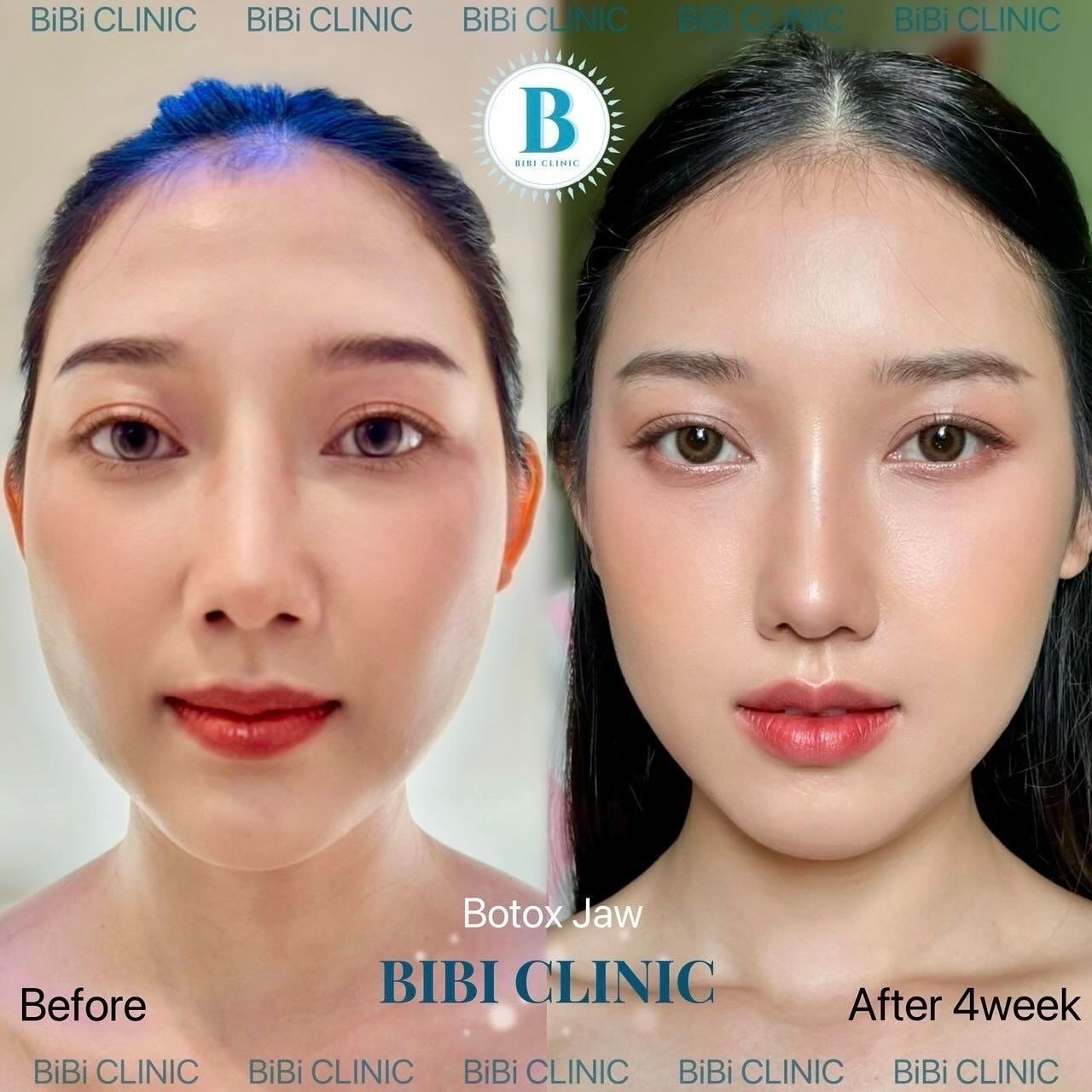
【Procedure】 Masseter Botox
【Photo Description:】Left: Before treatment, Right: After treatment
【Price】From 5,980 THB
【Downtime】 Difficulty moving the mouth, unnatural smile, etc. (varies from person to person)
By targeting the developed masseter muscles, the jawline is softened, resulting in a more defined jawline. The overall balance of the face is improved, creating a sharp and sophisticated look.
<Treatment Cases②>
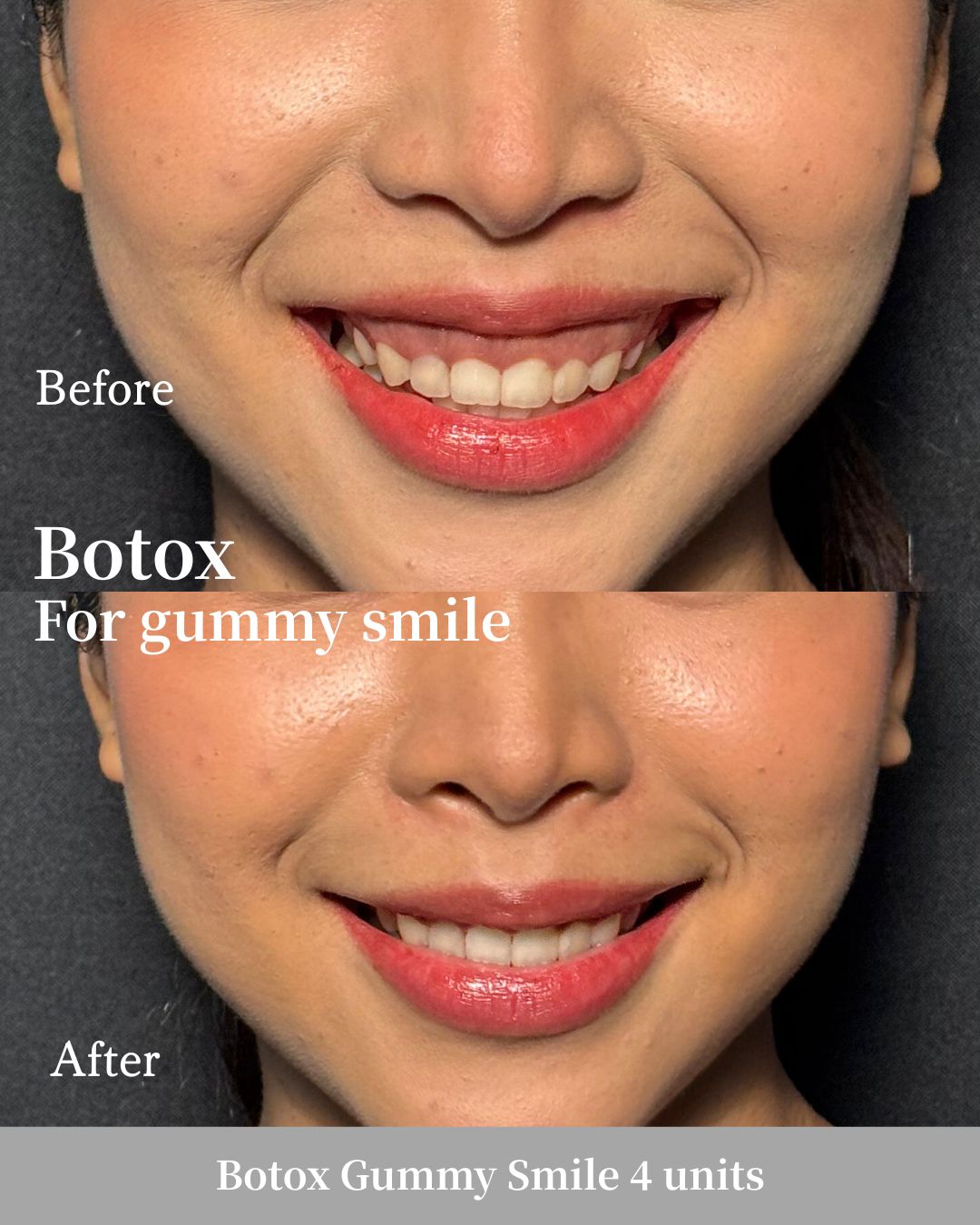
【Procedure】 Botox (Gummy Smile)
【Photo Description】 Top: Before treatment; Bottom: After treatment
【Price】 From 2,980 THB
【Downtime】 Difficulty moving the mouth, unnatural smile, etc. (Varies from person to person)
The approach is designed to minimize the visible area of gums while taking care not to detract from the overall impression of your smile. This creates a more natural and elegant smile.
What to Expect: Botox Aftercare, Side Effects & How Long It Lasts
We spoke with Dr. Jam about the questions people considering Botox often ask and the answers to those questions.
To help you feel confident about undergoing treatment, let’s go over some practical points, such as “How long do the effects last?”, “Are there any side effects?”, and “What should I be careful about after the procedure?”
Q:How Long Does Botox Last — and What Affects the Results?
A:The effects of Botox generally last for about 3 to 6 months, though this varies from person to person depending on factors such as metabolic rate, physical activity, the treatment area, and the dosage administered.
For example, the masseter muscle moves relatively little, so the effects tend to last longer, whereas areas that move frequently in daily life, such as the corners of the eyes and around the mouth, have a faster metabolic rate, so the effects tend to wear off more quickly.
In addition, in some cases, receiving repeated treatments can make it easier to maintain the effects even with smaller doses.
At Bibi Clinic, we generally recommend treatments every 3 to 4 months as a guideline for maintaining results.
However, it is important to consult with your doctor to plan your next treatment based on when you feel the effects are starting to wear off.
Q:What are the possible side effects of Botox?
A:Botox injections are a procedure with relatively little downtime, but common temporary side effects include redness, swelling, bruising, and headaches at the injection site.
In most cases, these symptoms subside naturally within a few days.
However, if the injection site or dosage is inappropriate, it may lead to drooping eyebrows (ptosis), a feeling of heaviness in the eyelids, or asymmetry in facial expressions.
To minimize these risks, thorough pre-treatment consultation and precise injection planning by an experienced physician are essential.
Q: Are there any precautions I should take after getting Botox?
A:Washing your face and showering are both fine from the day of treatment, but for the first 24 to 48 hours, it is recommended to avoid:
- Strenuous exercise
- Alcohol consumption
- Saunas or prolonged hot baths
- Hot spring bathing
- Firm massage or pressure on the treated areas
Also, because Bangkok has a hot and humid climate, please avoid excessive sweating on the day of the procedure and stay in a cool place as much as possible.
When going out, please wear a hat, avoid direct sunlight, and use sunscreen with an SPF of 50 or higher.
Whether you are a resident or a traveler, taking aftercare measures that account for Bangkok’s climate is key to maximizing the treatment’s effectiveness.
If you have any concerns about side effects or your recovery, please do not hesitate to contact the clinic as soon as possible rather than trying to handle it on your own.
Get a Personalized Botox Area Assessment
at Bibi Clinic
Botox Bangkok at Bibi Clinic: Experience Natural Rejuvenation with a Japanese Touch
Botox in Bangkok has never been more accessible — or more refined.
But as options continue to grow across the city, the most important question isn’t just “where to go” — it’s “what kind of result do you want, and who has the expertise to deliver it.”
At Bibi Clinic, we combine these refined Japanese standards with Thailand’s proven medical expertise under the technical supervision of Tokyo’s “BIANCA CLINIC.”
Through meticulous, personalized designs, trusted FDA-approved products from brands like Allergan and NABOTA, and careful aftercare guidance tailored to Bangkok’s tropical climate, we provide a safe and deeply satisfying aesthetic experience.
Whether your goal is preventive care for the future or restoring a naturally youthful balance today, the key is finding a physician who will design a precise, whole-face plan that is truly yours.
Why not start a new chapter in your life with a trustworthy doctor at Bibi Clinic?
| Location | Hotel Nikko Bangkok, 3rd Floor, Room 306, 27 Sukhumvit 55 (Thonglor), Khlong Tan Nuea, Wattana, Bangkok 10110 |
| Phone | 062-516-6622 |
| Opening Hours | 9:00 AM – 7:00 PM |
| Official Website | https://bibi-beauty.com/en/ |
| @bibi_clinic_en |
Related Articles You May Like

| Treatment Details | Botox Injection |
| Recommended Treatment Period and Number of Sessions | To maintain the effects, regular maintenance treatments are recommended every 3 to 6 months. *This may vary depending on skin condition. |
| Cost | <Nabota> 1 area: 2,980B, 50 units: 5,980B, 100 units: 11,960B
<Allergan> 50 units: 16,800B, 100 units: 29,800B |
| Risks and Side Effects | Pain and swelling at the injection site, headache, partial muscle weakness, skin tightness, redness, bruising, tingling sensation, numbness, nausea, temporary indentation, internal bleeding, etc. |