📌 Key Takeaways
The core issue of parallel imports is not legality, but the collapse of essential safety preconditions
According to the President of JSAS, safety is determined not by the product itself, but by distribution, management, and accountability structures
NERO’s independent investigation found that multiple major authorized manufacturers and official import agents share the same warning signs
The true divide between authorized and parallel products is not the product name, but the presence or absence of traceability and education-based safety infrastructure
Ultimately, patients bear the greatest risk within this structural breakdown
INDEX
- What Comes After Part One: The Question Now Being Asked
- 1. Why Is Parallel Importation Now a Question of Medical Foundations?
- 2. Dr. Kamakura on the Preconditions for Safety in Aesthetic Medicine
- 3. The Real Divide: Not the Product, but the Structure
- 4. What Multiple Companies Independently Confirmed
- 5. Where Safety Is Actually Lost
- 6. The Challenges Facing JSAS Today
- Editor’s Perspective — A Redefinition of Medicine
- Conclusion — Restoring the Foundations of Safety
- Profile: Dr. Tatsuro Kamakura
- NERO’s Mission
What Comes After Part One: The Question Now Being Asked
In its first exclusive report, NERO examined the expanding risks of parallel imports in aesthetic medicine:
-
“The Hidden Risks of Parallel Imports Undermining Aesthetic Medicine”
https://nero-drbeauty.com/news/27939 -
“The Dark Reality of Parallel-Imported Aesthetic Drugs”
https://nero-drbeauty.com/news/26360
Rather than framing the issue as a simple debate—
“Are parallel imports illegal?” or
“Are lower-priced products inherently dangerous?”
Part One revealed a structural crisis that cannot be captured by binary arguments.
In this second installment, NERO turns to Dr. Tatsuro Kamakura,
President of the Japan Society of Aesthetic Surgery (JSAS),
to examine why the fundamental preconditions for safety in aesthetic medicine are now being questioned.
1. Why Is Parallel Importation Now a Question of Medical Foundations?
Parallel imports are not automatically illegal under current regulations.
For years, they have been discussed mainly in terms of pricing, competition, and free-market dynamics.
However, within clinical practice, this framing has reached its limit.
The problem is not the method of parallel importation itself.
The true issue lies in the quiet erosion of the preconditions required for medical safety—
conditions that were once assumed, but are no longer guaranteed within today’s market structure.
2. Dr. Kamakura on the Preconditions for Safety in Aesthetic Medicine
Dr. Tatsuro Kamakura
President, Japan Society of Aesthetic Surgery (JSAS)
“In medicine, it must always be clear where a product has been managed and who is responsible for it.”
“Before discussing price or distribution channels, we must ask whether the fundamental conditions that allow safety to exist are actually in place.”
Importantly, Dr. Kamakura does not take a position of blanket opposition to parallel imports.
However, he adds:
“Medical practice carried out without these preconditions—
even without malicious intent—
can ultimately increase risk for patients.”
The “preconditions” he refers to go far beyond whether a product is genuine.

3. The Real Divide: Not the Product, but the Structure
As reported in Part One, the critical difference between authorized and parallel products is not labeling or appearance.
It is the structure of distribution and accountability behind them.
“Even if products appear identical,
differences in management systems and responsibility design
result in completely different levels of medical safety.”
— Dr. Kamakura
Safety, in other words, is structural.
4. What Multiple Companies Independently Confirmed
For this investigation, NERO conducted interviews with multiple major authorized manufacturers and official import agents who have long supported Japan’s safety infrastructure in aesthetic medicine.
Despite differences in products and corporate positions, their observations were strikingly consistent:
-
Rapid growth of parallel and semi-parallel distribution
-
Possible breakdowns in temperature-controlled logistics
-
Loss of lot-based traceability
-
Risks of degradation, dilution, or expiration
-
Structural ambiguity in accountability when adverse events occur
Crucially, these are not allegations, but recurrent field observations shared independently across companies.
5. Where Safety Is Actually Lost
For decades, authorized distribution routes have supported an invisible safety infrastructure, including:
-
Cold-chain temperature management
-
Lot and manufacturing traceability
-
Physician education and training systems
-
Academic society support
-
Clear responsibility lines during incidents
“What disappears with expanding parallel distribution
is not necessarily product quality itself,
but the conditions that make safety possible.”
— Dr. Kamakura
Once a product exits authorized channels,
traceability, accountability, education, and response frameworks can vanish simultaneously.
6. The Challenges Facing JSAS Today
“Under current systems, drawing a clear legal line between authorized and unauthorized distribution is not easy,”
Dr. Kamakura explains.
“That is precisely why it is critical for physicians to share a common understanding of how they make judgments.”
JSAS does not position itself as a policing authority.
Instead, it emphasizes shared decision-making frameworks as the most realistic safeguard available today.
The Role of Supporting Members and Advisory Committees
Within JSAS, supporting member systems and advisory committees exist not as sponsorship structures, but as mechanisms to:
-
Share safety-related expertise
-
Support physician education and information quality
-
Visualize distribution and management challenges
“Our goal is not regulation for its own sake,”
says Dr. Kamakura.
“It is to create a shared axis of judgment across the industry.”
JSAS positions itself not as an enforcer, but as a provider of medical reference standards.
Editor’s Perspective — A Redefinition of Medicine
The crisis surrounding parallel imports is not about legality.
It is about the silent dissolution of the foundational conditions that medicine depends on:
distribution, management, responsibility, and education.
And the ultimate destination of this structural distortion is always the same—
the patient.
Patients cannot independently verify:
-
Distribution pathways
-
Storage conditions
-
Accountability structures
-
The presence or absence of traceability
“Patients are not in a position to judge what lies behind lower prices.”
— Dr. Kamakura
Safety is not determined by price or branding.
It depends on whether products can be traced, responsibility can be followed,
and education and management systems remain intact.
What parallel importation ultimately forces us to confront is this question:
Is this practice truly functioning as medicine?
Conclusion — Restoring the Foundations of Safety
-
The parallel import issue is structural, not moral
-
Institutional boundaries are increasingly difficult to see
-
Shared judgment criteria are therefore essential
-
Patient safety must remain the final priority
NERO will continue, as an independent medical journalism platform,
to visualize the structure of safety in aesthetic medicine.
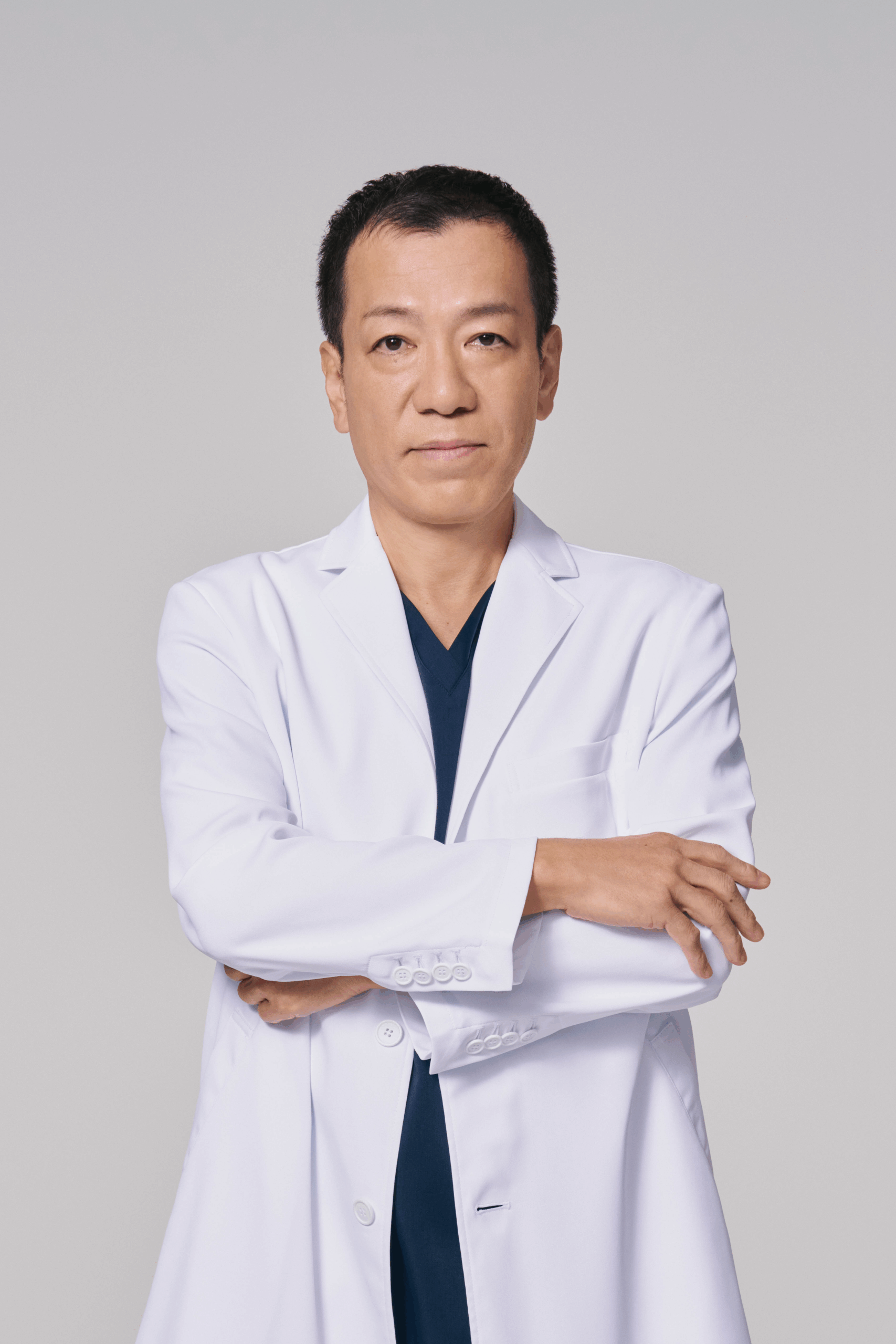
Profile: Dr. Tatsuro Kamakura
-
Chief Executive Director, Seishin Aesthetic Clinic
-
President, Japan Society of Aesthetic Surgery (JSAS)
Graduated from Miyazaki Medical College in 1989.
Trained in surgery at Kyushu University before transitioning into aesthetic surgery.
Served as Director of Tokyo and Fukuoka clinics before assuming his current role.
President of JSAS since 2022.
NERO’s Mission
NERO is committed to visualizing the structure of safety
to support a transparent, sustainable future for aesthetic medicine.
Authorized or parallel—
those choices increasingly determine patient safety.
That is why patients, physicians, and all stakeholders
must have access to accurate frameworks for judgment.
NERO will continue to report with independence,
grounded in primary sources,
to protect the future of aesthetic medicine.